
Takes 30 seconds. We call you back to set a time.
Every photo here is from our own work, with our logo on it.
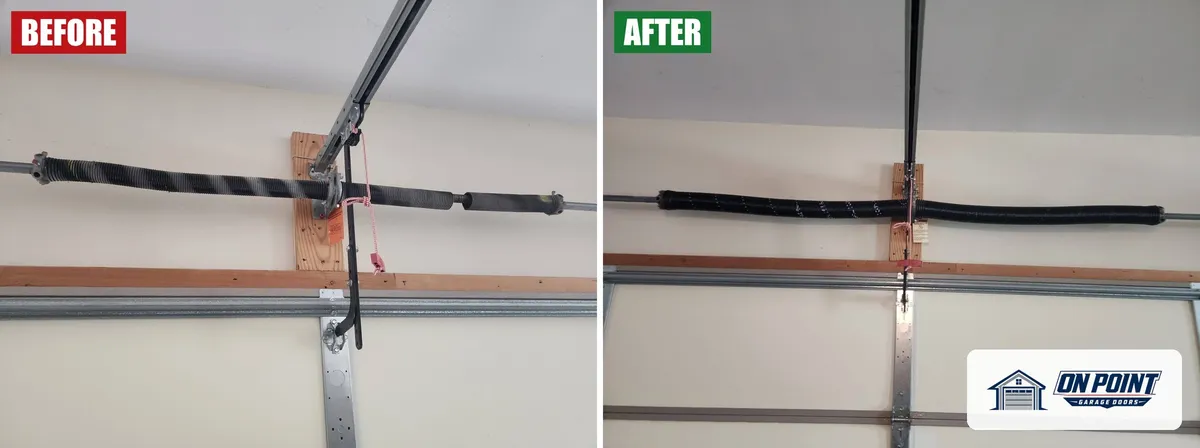
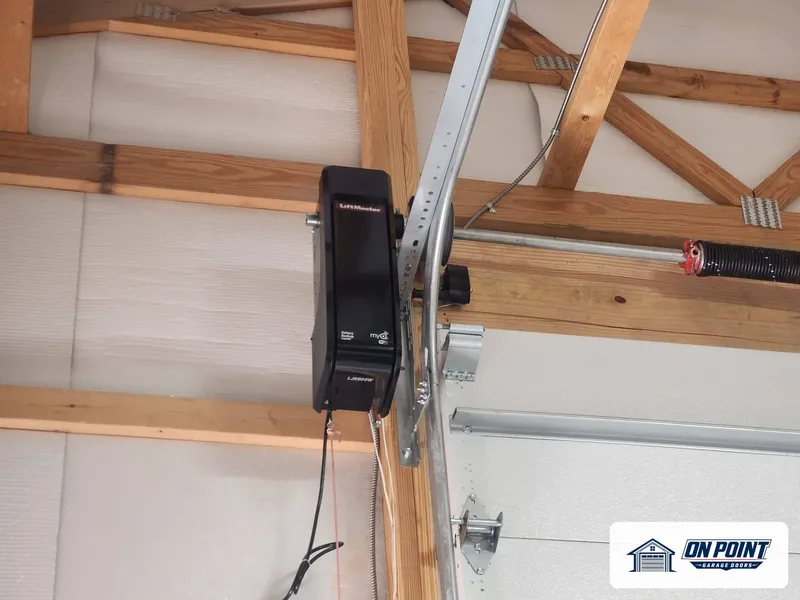
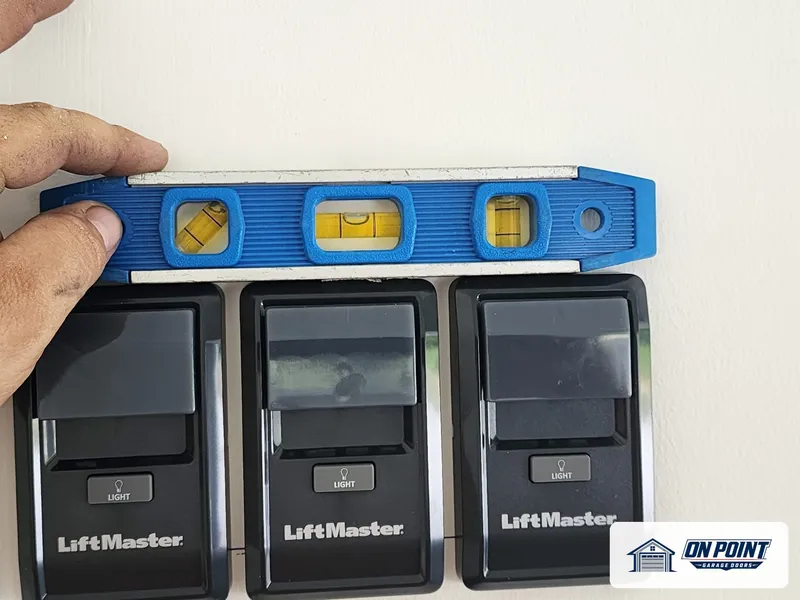
Townhome rows and subdivision houses across metro Atlanta are trading plain openers for ones that talk to a phone: a ping when the door moves, a way to shut the one you forgot, and keyless access for the people you trust. We put them in, bring older openers onto an app, and get stubborn smart units back online. The estimate is free.
Inside the garage, hardly anything. The motor still tows the door, the two little sensors near the floor still watch the threshold, and the button by the kitchen door does what it always did. The new part is a radio that joins your home network, so the opener can send news to your phone and take orders back.
Owners tend to fall for the notifications before anything else. A heads-up at two in the afternoon that the door just rose, a reminder at eleven that it never came down, a timeline of who came home when. From the app a forgotten door can be lowered from the carpool line, a sitter or a neighbor can be let in for the afternoon, and some models will lower the door themselves after it has stood open longer than you like.
One is to swap in an opener that ships with Wi-Fi. On current LiftMaster and Chamberlain units that means the myQ app; Genie calls its version Aladdin Connect. The other is a retrofit: a compact hub wired to the opener already on your ceiling, plus a tilt sensor on the uppermost panel that tells the hub whether the door is raised.
A retrofit makes sense on a sturdy opener that still moves the door without complaint. Replacement wins when the old unit roars, labors under the door, or relies on remotes with a strip of tiny dip switches inside, an old design that offers little protection against copying.
A few openers should never be put on an app. If the floor sensors are missing or dead, or the motor already fights a heavy door, the door gets made right first, and the estimate explains the reasoning in plain words.
So many metro houses stack a bonus room or a bedroom on top of the garage, and townhomes often share a ceiling between the parking bay and the den. There, how the opener drives the door matters as much as any feature in the app. A belt pulls the trolley with a low murmur, where a chain clanks and shakes the joists.
For a garage full of overhead storage, or one without much clearance, the wall-mount style hangs beside the door rather than over the car and turns the torsion bar itself. That style only works with torsion springs mounted above the opening. Every one of these drive types comes with app control, so pick for the house and the people in it.
Those late-day thunderstorms that roll across north Georgia all summer love to cut the power, and the jolt when it returns is a classic way to lose an opener's logic board. A plug-in surge protector between the opener and its outlet takes most of that jolt instead.
With a backup battery inside, the door still runs during an outage, so nobody is stuck with the car trapped. Keep in mind that the router goes dark with the power, so your phone loses touch with the garage until the lights come back, while the wall button and the remotes carry on. Months of trapped heat shorten these batteries, and they get a load test on each visit.
An opener is only as smart as its connection. Plenty of two-story houses keep the router in a bonus room or an office on the opposite side from the garage, with brick veneer, a laundry room and a stairwell soaking up the signal on the way. On top of that, most of these openers join only the 2.4 GHz side of a network, and some newer routers merge both bands under a single name that confuses the setup.
That is why the first reading is taken with a meter at the spot where the opener hangs. If the number is poor, a mesh node or a range extender near the laundry room or the garage wall usually closes the gap. The networking gear is yours to choose, and finding the problem before mounting anything saves a frustrating repeat trip.
Retrofit or brand-new opener, every visit follows this order.
Smart openers misbehave in a few familiar ways. The phone shows a gray offline banner after somebody replaced the router or changed the password. The door rises from the wall button but shrugs off the app. The app swears the door is up while it sits shut, which usually means the tilt sensor's battery died or the sensor came unstuck. Or the opener has been dark since the power blinked.
Each points somewhere different, whether that is the network pairing, the tilt sensor or the logic board. Describe the screen and the door's behavior when you call, and the technician knows where to start. When an opener has truly worn out, the estimate shows a repair and a replacement so the call stays yours.
Almost never. Architectural guidelines cover what shows from the street, and an opener hangs out of sight on the ceiling. The outside of the door looks exactly as it did.
Usually, through a retrofit hub and tilt sensor, provided the floor sensors work and the opener raises the door comfortably. Switch-code era units are better retired, and the estimate tells you which camp yours is in.
If the opener has a backup battery, the wall button and remotes keep working. The phone stays out of touch until the router has power again, then reconnects by itself.
Opening and closing from the phone comes with the opener at no extra monthly charge on the common makes. Some brands sell add-ons, such as keeping camera recordings, so read what your model offers.
Yes, with the right opener. Units designed for remote closing blink a light and beep for several seconds first, and the floor sensors and reversing system still guard the doorway. We prove both before leaving.
Seldom. A new router, a changed password or a flat sensor battery accounts for most offline screens, and the opener itself is often fine.
Yes. Each family member can get their own login, and guests can be given access that expires on a day you set.
Yes. After the door, the opener and the Wi-Fi are checked, you get the options in writing, at no charge, before anything is installed.
Explain what the door is doing and we'll say, honestly, whether today is necessary. Free estimate wherever you are.
Rather say it out loud? Call (770) 629-9647.
Tell us what's happening. Free estimate, nothing owed.