
Takes 30 seconds. We call you back to set a time.
Every photo here is from our own work, with our logo on it.
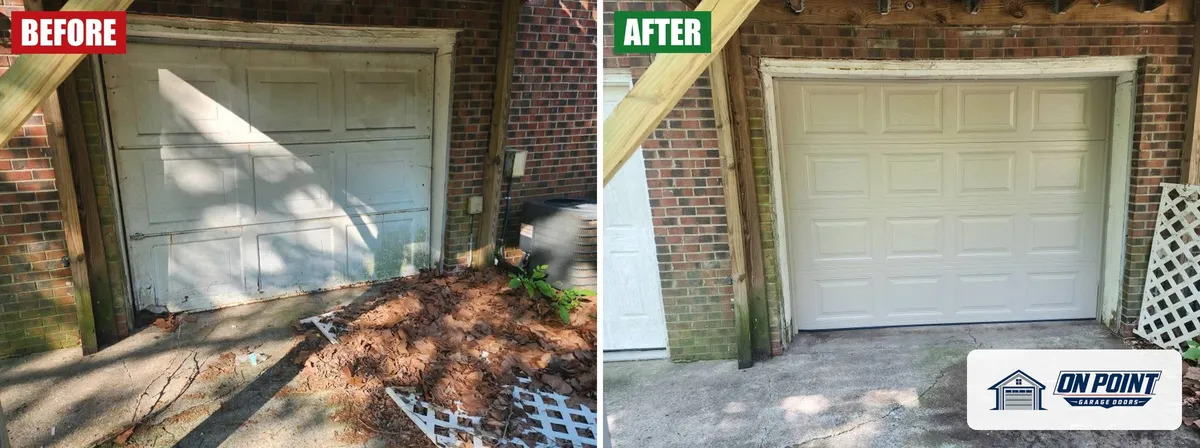
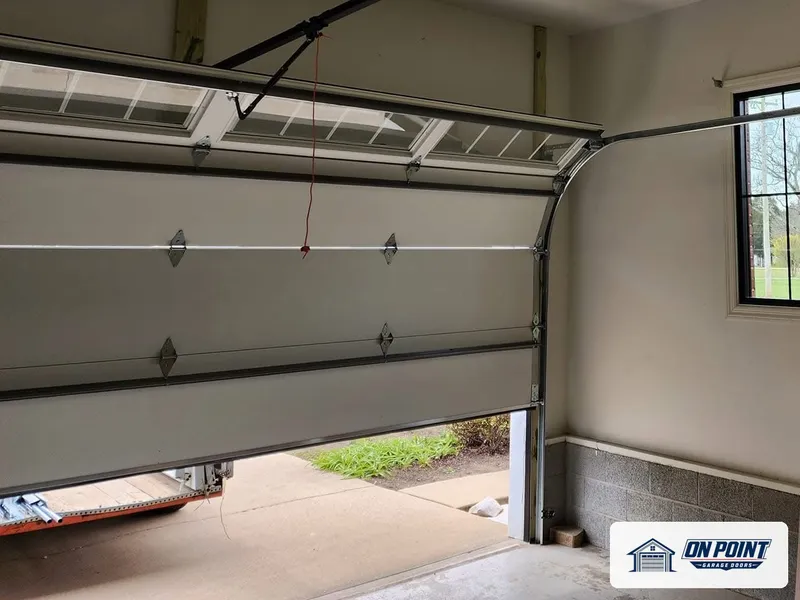
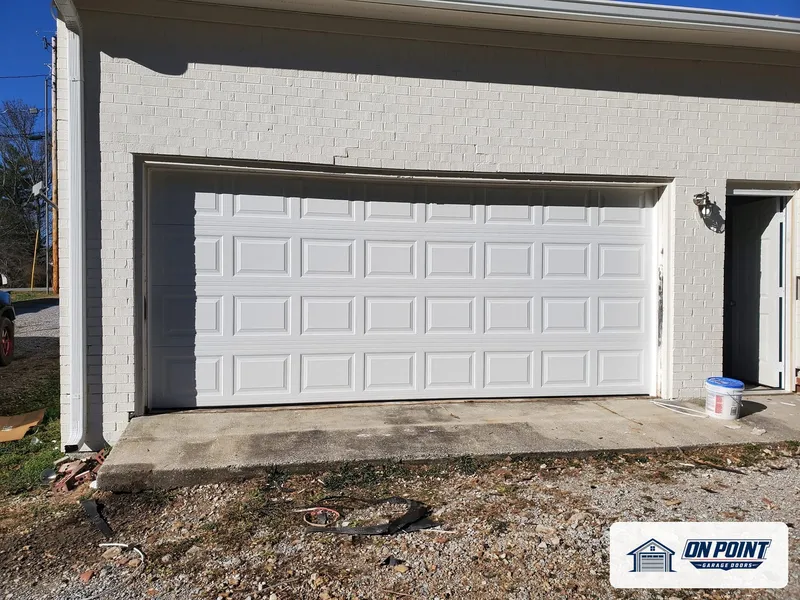
A basketball off the driveway, a bumper in a tight townhome lane or a pine limb in a summer storm can crease one section of a door and leave the rest untouched. OnPoint Pro Doors swaps damaged sections across metro Atlanta when a matching one can still be ordered, and says plainly when it can't. The estimate is free.
A sectional garage door is a stack of separate sections joined by hinges, and each one can come out on its own. That only helps if the maker still produces the same design at the same height and thickness, because a section from another product line won't line up at the joints or follow the same pattern across the front.
So the first job is identifying the door. The technician finds the maker's label, measures the damaged section and photographs the design before anything is promised. When the match exists, one section is the sensible repair. When the line has been discontinued, you hear that up front, along with what a new door would involve, and the choice stays yours.
Around here the bottom section takes the most punishment. Summer downpours splash it, rain drips off the car onto it, and leaves pile against it through the fall. On steel doors the rust starts along that bottom edge and creeps upward behind the paint.
Higher up, the damage is usually a single event: a branch dropped in a storm, a ladder that tipped, a car that rolled a little too far in a narrow bay. One creased section can still be lived with for a while, but a crease near a hinge or a roller bracket weakens the section where the door bends over the curve every trip.
Townhome rows add their own pattern. With a shared lane and little room to turn, the lower corners of a door take the bumps, and a door hit at the corner often bends its end stile and pushes the roller out of line. That is checked along with the section, because a straight new panel on a twisted track still binds.
A new section arrives in the factory color. A door that has faced the afternoon sun for a decade has faded, and the difference shows the moment the new section goes in, especially on a dark brown or a deep red.
There are a few honest ways through that. On a lightly faded door the new section often blends once it has weathered a season. On a heavily faded one, painting the whole door after the swap gives an even face, and the technician tells you which case yours is before you agree to anything. Communities with rules on exterior colors care about how the door reads from the street, so keeping the original design and shade keeps it the way it was approved.
Four stages, and the spring tension decides the order.
An insulated section is heavier than a single layer of steel, and it shows a finished face on the inside. Mixing one into a door built without insulation changes the balance and looks odd from inside the garage, so the replacement follows whatever the door was built with.
Window sections are their own case. A cracked pane can sometimes be replaced without touching the section, while a bent frame around the glass means the whole section goes. Wide two-car doors carry steel struts across their sections to keep them from sagging, and the strut moves to the new section rather than being left off.
Some doors in the metro carry decorative overlays or a carriage pattern pressed into the steel. Those designs are matched by name and size from the maker, not by eye, so the new section continues the pattern across the door instead of breaking it.
Springs are wound for the exact weight of the door. Swap one section for a heavier or lighter one and the door no longer balances: it creeps up from halfway, or drops, and the opener strains to make up the difference. Under a bonus room that strain is the rumble someone hears every morning.
So every section job ends with the springs checked against the door's new weight and the cables inspected for fraying at the bottom brackets, where humidity starts its work. If something is due there, it is written up as its own line so you can decide separately.
Several dented sections, rust through more than one, a design nobody makes anymore, or a door so old that its springs and hardware are due as well: at that point a section swap only patches part of the problem. The technician lays out both options with the reasons, and if a new door makes sense, our new garage door installation page walks through how that goes, from the measure to the first run.
Usually, yes, when the maker still makes that design in the same size. The technician identifies the door first and tells you whether a matching section can be ordered before anything else happens.
The new section comes in the factory color. On a lightly faded door it tends to blend over time; on a heavily faded one, painting the whole door gives an even face. You hear which applies to your door before you decide.
Yes. A cracked pane can sometimes be swapped on its own, and a section with a bent frame around the glass is replaced as a whole section.
It can, because the weight changes. That is why the springs are checked and set to the door's new weight before the job is finished.
Surface rust can be dealt with, but rust that has eaten through the steel weakens the section where the bottom bracket and cable attach, so that section is swapped.
Light dents in a single-layer door sometimes come out well enough to live with, but a crease that runs across a section or sits near a hinge weakens it. The technician shows you which kind yours is.
Matching the existing design and color keeps the door the way it was approved. If anything about the look would change, it is worth asking the association before the order goes in.
Yes. The door is identified, the options are explained, and the free estimate comes before any work or any order.
Explain what the door is doing and we'll say, honestly, whether today is necessary. Free estimate wherever you are.
Rather say it out loud? Call (770) 629-9647.
Tell us what's happening. Free estimate, nothing owed.