
Come off once, come off again, unless someone finds out why. Usually a seized roller, a slipped drum or a loose bracket.
Tell us what the door is doing. The estimate is free and you can say no.
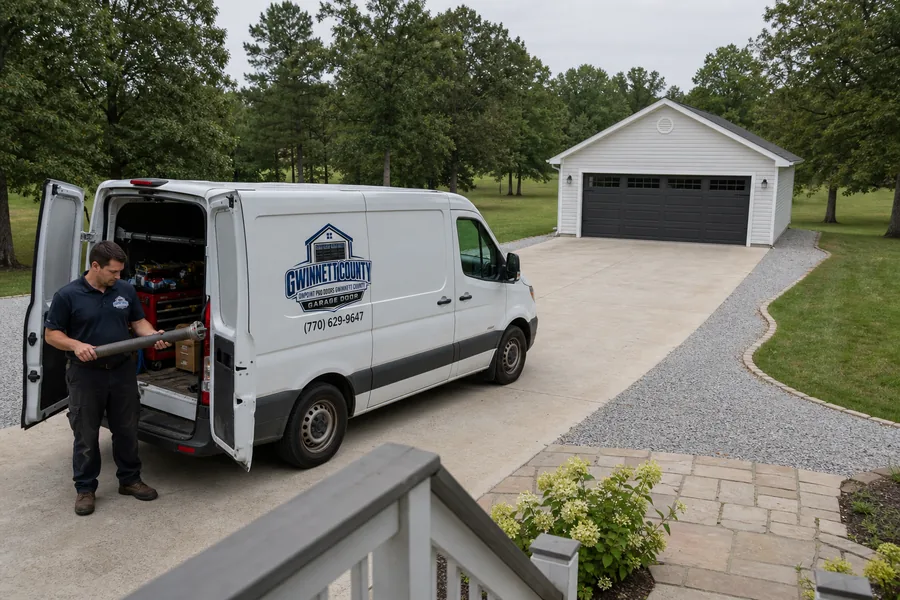
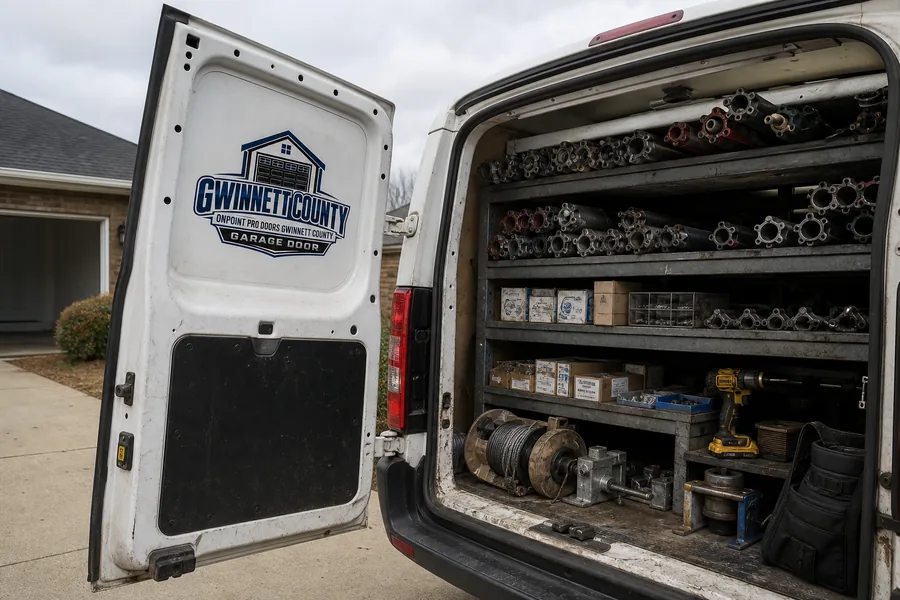
Most off-track garage door repair calls we take start the same way. The door moved fine yesterday. That is normal. The failing parts are structural. Structural parts give way in a moment, not over weeks. Humidity rusts cables and bottom brackets, and summer storms drop limbs and debris into tracks. Which is how we carry the parts for it on the van rather than ordering them in.
Steel track, rollers in it, door hanging from them, held flat against the opening. If one roller leaves the channel, that corner of the door drops, the panel twists, and the rollers above and below it are levered out too. A single roller is all it takes. Within minutes the door is hanging sideways.
Atlanta, Dunwoody, Sandy Springs, Marietta, Kennesaw, Johns Creek, Douglasville and the rest of Atlanta are all inside the normal radius. The visit asks nothing of you, and no work starts without your say.
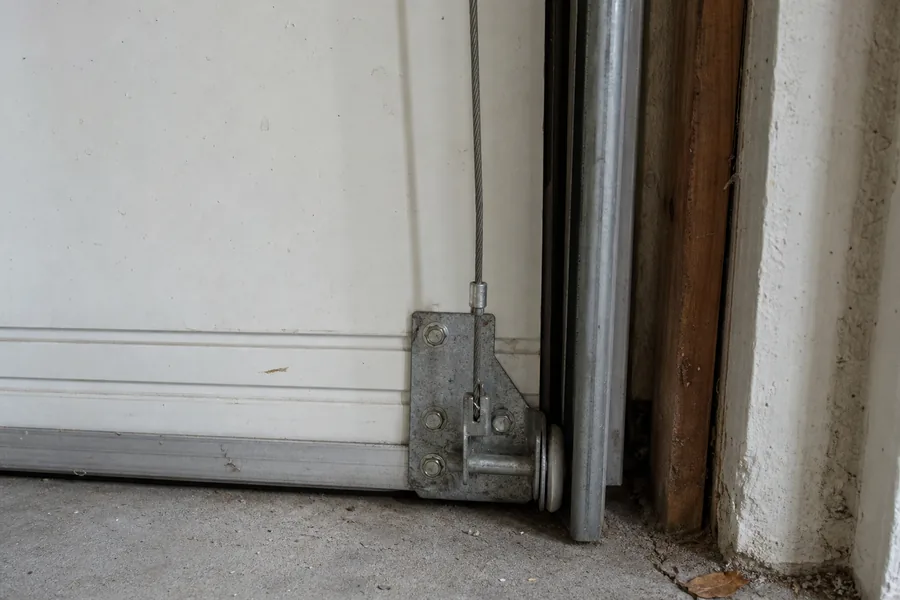
This is the fault you can diagnose from the driveway. The two edges of the door are at different heights. A gap of daylight has appeared along one edge. The door gets so far and binds, or scrapes instead of rolling, and there's a roller proud of the track.
Recognize any of those? On site, ten minutes is normally enough to pin it down. We come and look rather than guess, and the estimate is free.
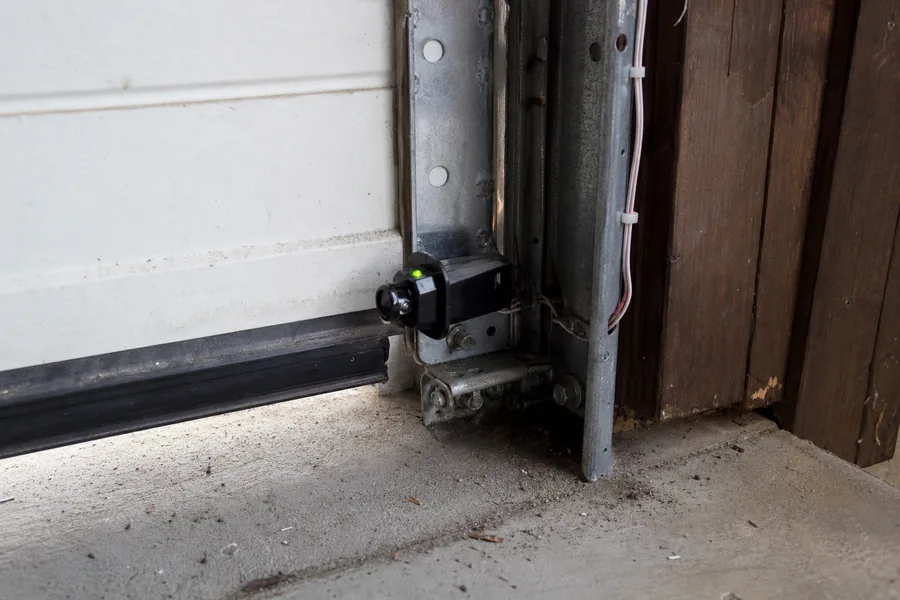
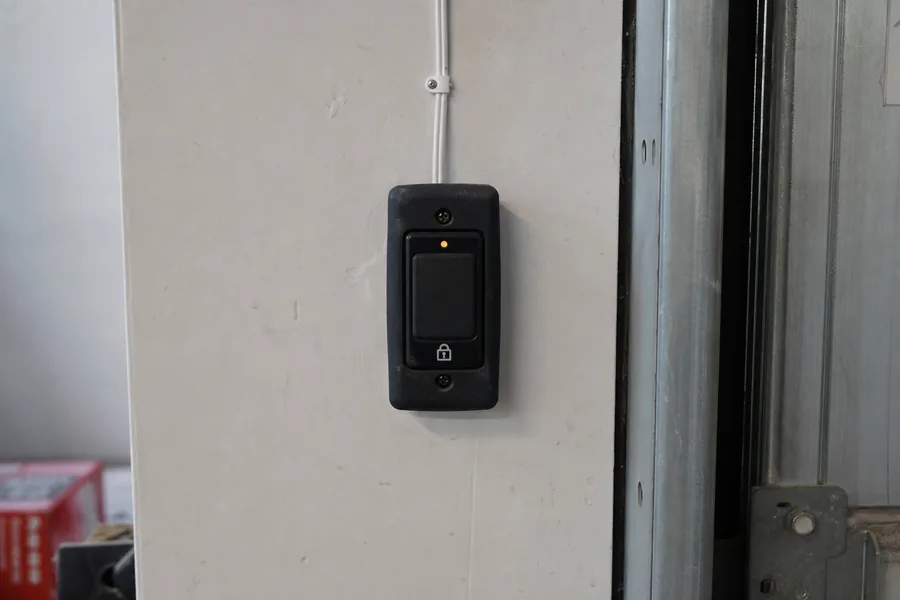
The counterbalance is still loaded and still attached, even with the door out of its track. The dangerous shortcut is levering the door back into its track with the counterbalance still wound. That is where injuries come from, and where a simple fix becomes a panel job.
Track doesn't fail with age. Something caused it. Usually one of four things: a stuck roller, a cable off the drum, a loose bracket, or a bump from a car. Reseating the rollers is the easy part. Finding what pushed them out is what stops it happening again a few weeks later.
It can be made to look straight. The door won't run straight, and the rollers will keep jumping out. A vertical track that has been bent is replaced. Hammering it flat leaves a hump the rollers catch on every trip.
None of that is unusual. Diagnosing from a description tends to end that way, which is why we don't do it.
People put this off. Here is what happens when they do. None of the following is unusual. That's the usual order of events; we see it most weeks.
It's a free estimate. Finding out asks nothing of you. That's the reason to call before it gets worse, not after.
Tracks don't wear out on their own. They come out of alignment because something happened to them. A car nudged the door, a cable failed on one side, a roller seized and dragged, or years of vibration loosened the brackets until the track drifted.
Realignment is done properly: the door's weight is supported, the rollers are seated, every hinge is checked for stretched holes, and the vertical track is set true with a level rather than by eye. We replace bent track. It can't be hammered true.
There's almost always a cause behind the derailment, and skipping it is why some doors come off twice in a month. Three causes cover most of them: a roller that seized, a drum that lost a wrap, a bracket that came loose. The job isn't done until one of them has been found and fixed.
The natural move is to try the opener and see if it reseats itself. It won't. The opener keeps pulling, and next to go out of shape are the horizontal track, the hinges, then a panel. The difference between a same-day realignment and waiting for a section to arrive. Pull the red cord and leave the door exactly where it is.
The right thing to do is nothing, and that surprises most people. Sitting still, a failed door stays put. Each press of the button to "check" adds damage.
The one exception is getting a car out. Release it closed, lift with your legs, and if it feels heavy, stop right there. Heavy in the hand means no counterbalance, and the door will fall on its own.
Yes, card. We take cards, and nothing gets decided on your doorstep.
Something forced it off: a seized roller, a cable off its drum, a loose bracket, a bump from a car. Coming off the track is the result, and we find what caused it.
Yes, 24 hours. If the door is stuck or the garage is open, a technician heads out that night instead of you waiting for the next opening.
Not if a spring or cable has gone. Leave it down and don't force it. The counterbalance stores a lot of energy, and it can release without any warning.
Most days, yes. Some of the day is kept free for exactly this, and a door standing open or a car trapped behind one goes to the front.
The other side gets looked at too, because a derailment twists the door and overloads the opposite hardware. We put everything back and true up the track.
There's no pressure attached to the call. Half the calls are people checking whether it is serious. When it isn't, they schedule it for a day that suits them. Nothing wrong with that result, and the estimate is free.
If it's urgent. A door stuck up, or a car stuck behind it. Mention it and you go ahead of the rest of the day. Atlanta, Fulton County and the towns around it.
A photo of the door from inside the garage, with the door closed, tells us most of what we need. Send it after the call if that's easier than describing it. It lets the tech load the right parts before leaving.
Two hours, not a day, and you'll get a call as the technician sets off. Free. The estimate is free either way.
Rather say it out loud? Call (770) 629-9647.
Tell us what the door is doing. The estimate is free and you can say no.