
Our most frequent call, and the one that injures people. We install the spring your door needs, not the one nearest to hand.
Tell us what's happening. Free estimate, nothing owed.
A broken torsion spring is the fault we're called out for most often in Atlanta, and it is the one homeowners least expect. Nothing looks worn, nothing sounds off, and then one morning the door stays down with the car behind it. Around Sandy Springs and Marietta we see it concentrated in 1990s two-story brick-front homes with attached two-car garages in the subdivisions, older ranches with carports converted to garages, where humidity rusts cables and bottom brackets, and summer storms drop limbs and debris into tracks.
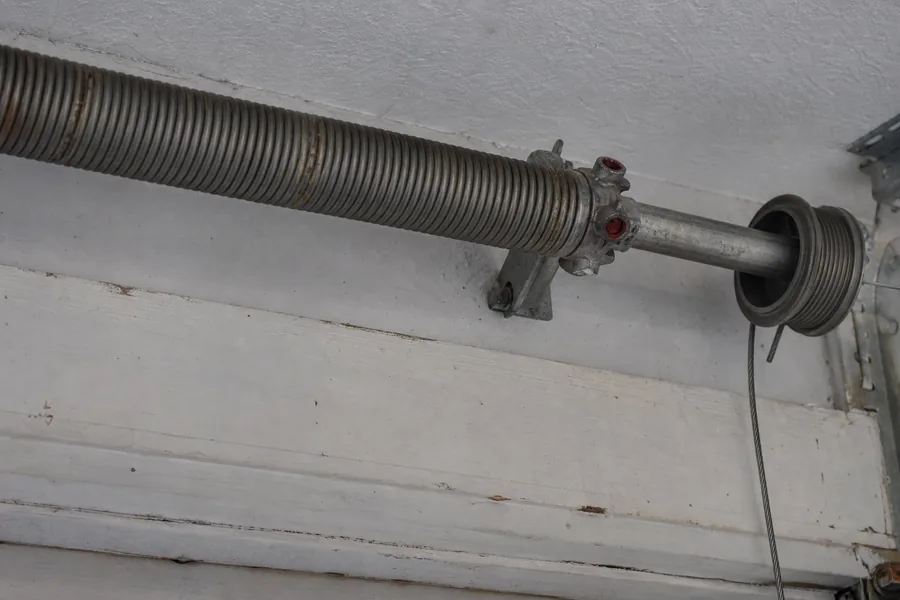
The spring isn't what lifts the door. It's what cancels the door's weight. A double door in steel comes in at 130 to 190 pounds before insulation. With the spring wound, the door behaves as though it weighs nothing, and half a horsepower is plenty. When the spring breaks, that balance vanishes and the full weight lands on the opener, which isn't built to lift it.
Free estimate wherever you are or Dunwoody, Sandy Springs, Marietta, Kennesaw, Johns Creek, Douglasville. Seeing the door and then saying no is perfectly fine. That closes it.
The neighbors usually call it a gunshot or a very hard car-door slam. It usually happens with nobody in the garage, and often at three in the morning, because steel contracts as the space cools and a spring at the end of its life will choose the coldest hour to let go. Whoever presses the button next finds the motor straining, the door rising two inches, then nothing.
Any one of those symptoms is usually pinned down within ten minutes of the technician arriving. No verdict on the call. The technician looks in person, at no charge.
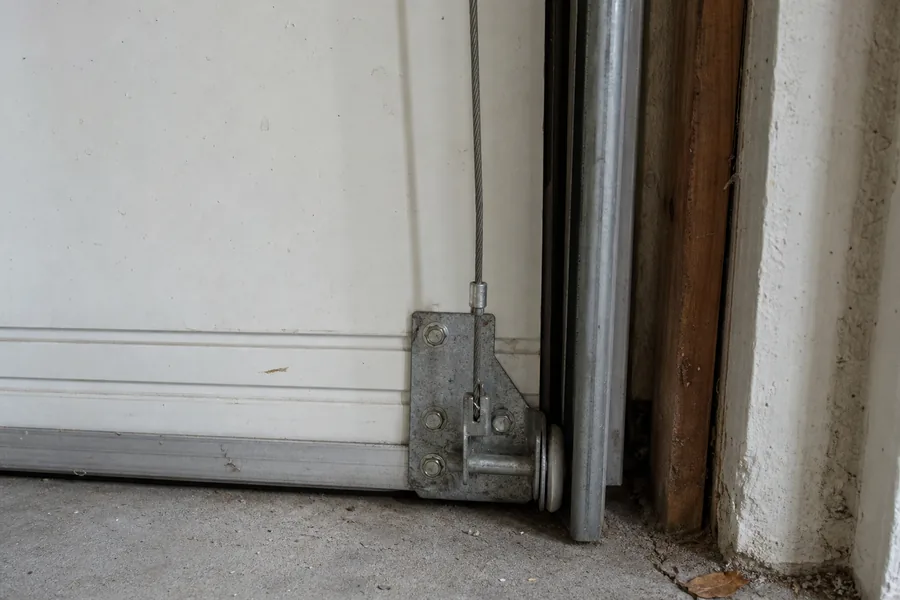
Torsion springs are rated in cycles. Years don't come into it. The factory spring on most doors is a 10,000-cycle part, and a cycle is one full open-and-close. A household opening the door four times a day uses about 1,460 cycles a year, which works out to seven years. With two commuters and a teenager the number doubles, and the spring goes in three years.
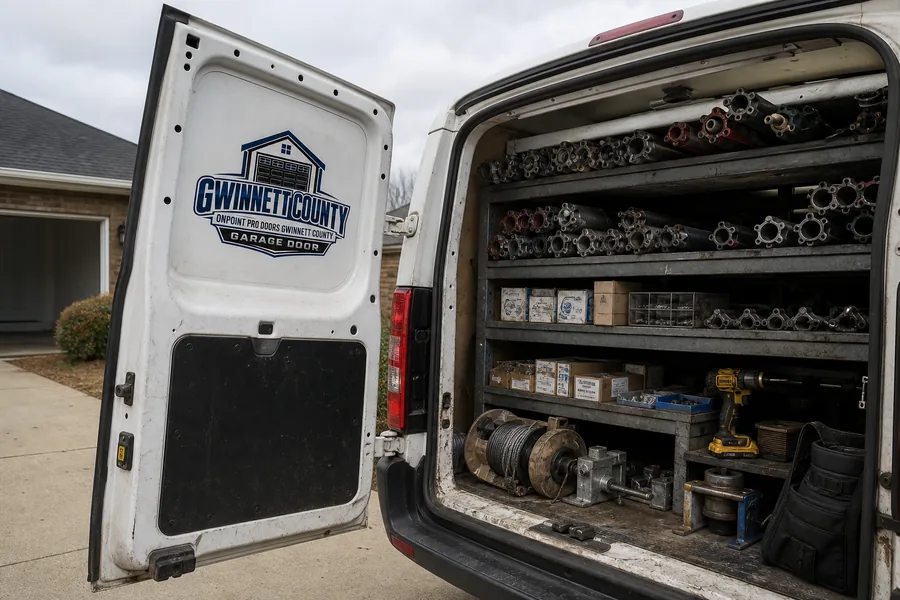
Springs come in a specific wire gauge, inside diameter and length, and together those have to match the door's weight. Nearly right isn't right: the door lifts, then the spring fails early. That's why the old spring is measured and the door weighed.
Twin springs are wound at the same time and wear at the same pace. The second one is the same age and usually follows within weeks. Swapping one and leaving its twin doubles the labor. So both go in front of you before anything is decided.
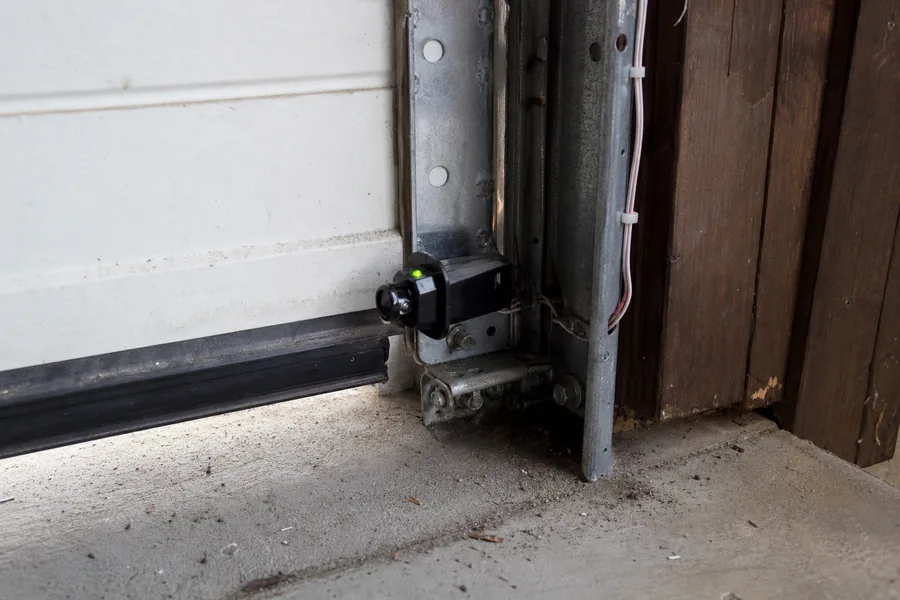
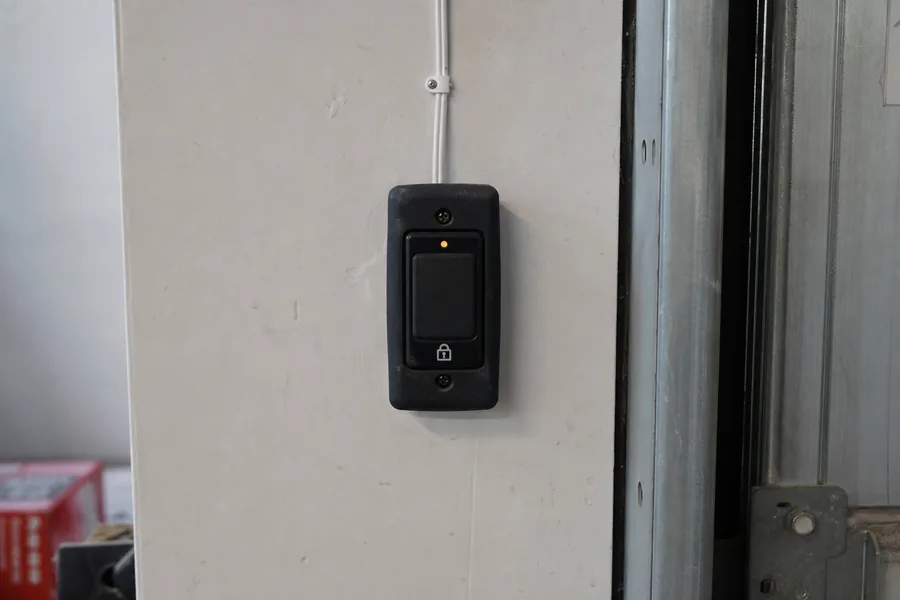
Most people wait. This is what waiting looks like. None of the following is unusual. That's the usual order of events; we see it most weeks.
Knowing where you stand is free, and it stays free if you say no. That is enough of a reason to call before it gets worse.
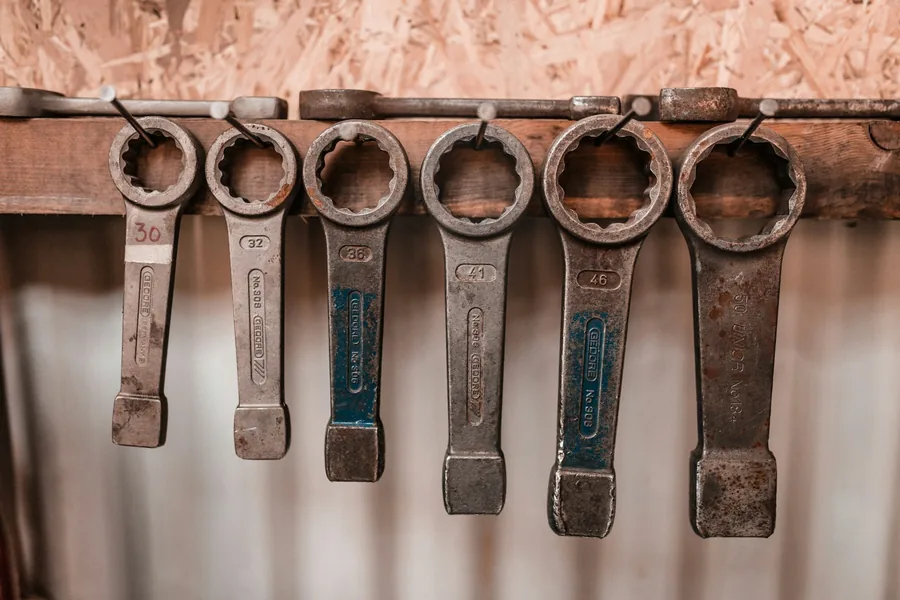
Of everything on a home garage door, this is the job that puts people in the hospital. A broken spring is still a loaded spring: the intact half carries its tension, with very little holding it. Do it the wrong way and the load is gone at once, along with whatever was holding it. Adjustable wrenches and screwdrivers are not proper tools.
Leave it, and pull the opener's plug if the temptation is there. Nearly every big repair was a small one two days earlier.
Need the car? Pull the red cord only with the door fully down, never halfway, and lift steadily. When it resists two hands, stop; forcing a door is where the injuries come from.
It almost never does. The spring is expected to wear out long before the door does, and on a sound door replacing it is routine. A technician who opens with "you need a new door" and hasn't touched the panels is working from a sales script.
Going stronger than the door needs creates its own set of faults, the mirror image of a spring that's too weak. It opens on its own, the opener has to fight it shut, and the safety reversal misbehaves. We match the spring to the door's true weight rather than going bigger.
You can. If that's what you'd like, that's what happens. Replacing just the broken spring works, until the other one, which has done the same number of lifts, goes too, and you're booking the job all over again. We show you both and let you choose.
None of that is unusual. Diagnosing a door unseen gives you precisely that outcome. We wait until a technician has looked before saying anything.
Yes. We look at the door on site wherever you are and tell you straight. The estimate is free.
Yes, all day and all night, seven days. A door that won't close or a car shut in is a same-night visit.
They were installed together and have worked together, so the survivor is usually weeks from going. You'll see both, and most people choose to do the pair once rather than twice.
Not if a spring or cable has gone. Leave it down and don't force it. The counterbalance stores a lot of energy, and it can release without any warning.
A spring has a cycle life, not a calendar life, and the last cycle is just another trip to work. Most give no sign at all before they let go.
Most days, yes. Some of the day is kept free for exactly this, and a door standing open or a car trapped behind one goes to the front.
One phone call, a two-hour window, and a call ahead. No auction for your call, no bidding contractors, and nobody who has never seen your door deciding what is wrong with it over the phone.
Free estimate. Throughout the Atlanta metro and Dunwoody, Sandy Springs, Marietta, Kennesaw, Johns Creek, Douglasville.
A photo of the door from inside the garage, with the door closed, tells us most of what we need. Send it after the call if that's easier than describing it. It lets the tech load the right parts before leaving.
Explain what the door is doing and we'll say, honestly, whether today is necessary. Free estimate wherever you are.
Rather say it out loud? Call (770) 629-9647.
Tell us what's happening. Free estimate, nothing owed.