
Takes 30 seconds. We call you back to set a time.
Every photo here is from our own work, with our logo on it.
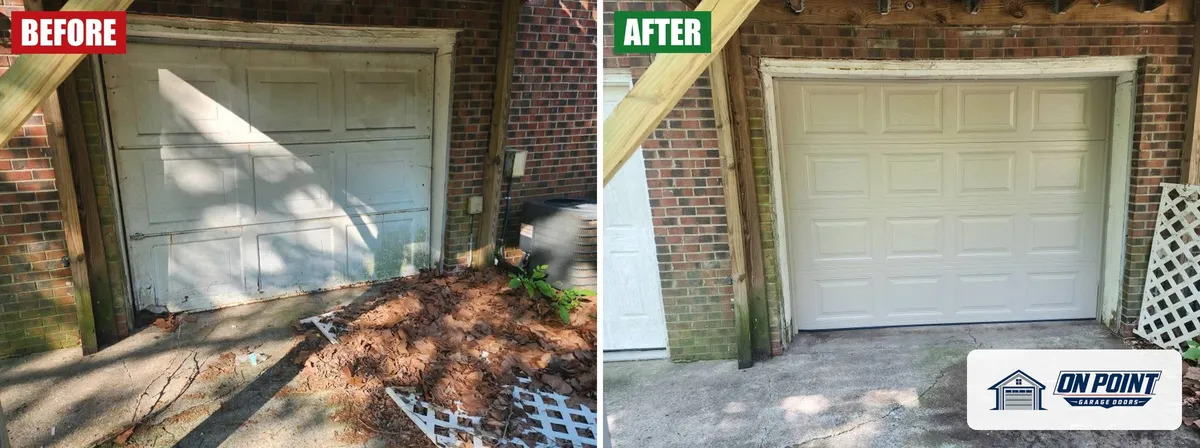
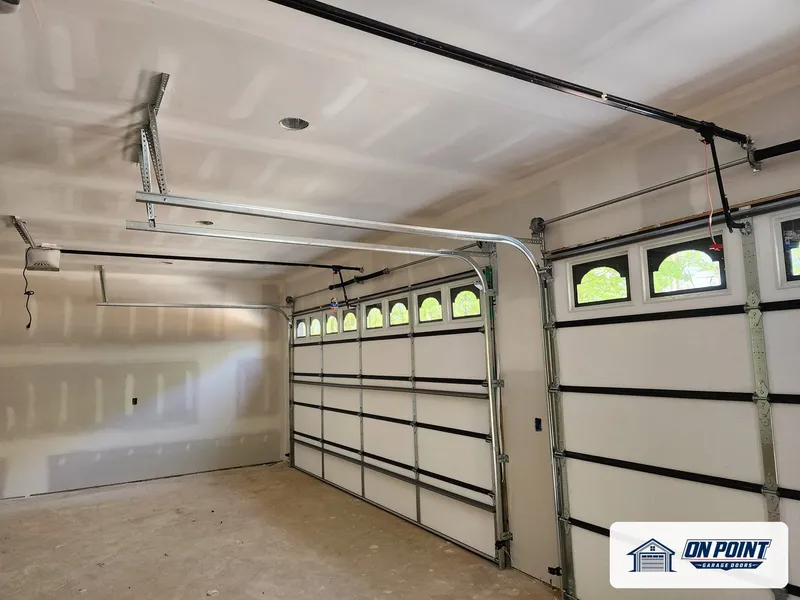
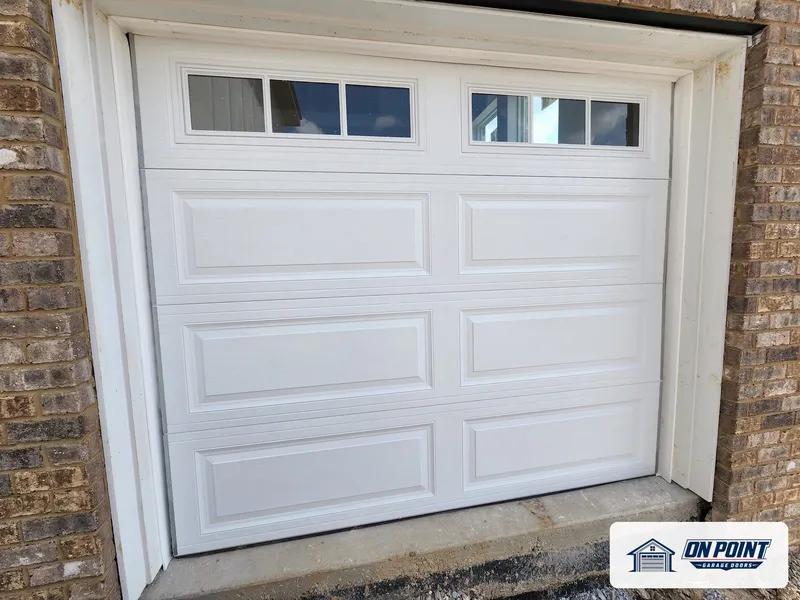
One garage door company for the whole metro, in town and out in the suburbs. The work we see most, how a visit runs, and the rules we keep.
A brick-front two-story from the nineties, two single doors or one double, builder springs, original cables and drums, and an opener that has already been replaced once. That house fills the suburbs, and its doors have reached the age when springs snap and cables fray, often one right after the other.
When one of two single doors fails, the other gets a look too, because its springs and cables have the same miles on them. The broken spring page explains why springs are replaced in pairs.
Townhomes bring narrow doors, tight side room where a cable can rub against the jamb, and tandem bays that park one car behind another. Most sit under an HOA that has a say on door style and color, and some set hours for contractor work.
A cable that rubs frays early, and a frayed cable is the one that lets go. The cable and roller page covers the signs.
A bonus room over the garage turns every rattle into a complaint. Metal rollers, a chain drive and a door that's out of balance are the usual culprits.
Nylon rollers, a belt-drive opener and a properly balanced door quiet it down, and an insulated door helps keep the room above from swinging hot and cold with the weather.
Long humid summers swell wood doors and trim, rot the bottoms of wood jambs, and rust springs from the outside in. Steel or composite doors with a woodgrain finish hold up better than real wood here.
Thunderstorms knock the power out and surges fry opener boards and sensors, and a fallen limb on a door is a common call after a big storm. The opener repair page covers the electrical side.
Builders across the metro installed the same handful of door models for years, so the parts are familiar: the same spring sizes, the same drums, the same bottom retainers. That familiarity is why most repairs here finish in one trip.
The exceptions are custom and carriage doors on newer infill houses and odd-sized doors on older in-town garages. Those are measured on the first visit, and anything special is ordered with a firm date.
Tell us what the door is doing and whether a car is trapped, and a window gets set. The technician calls when on the way, then checks the springs, cables, drums, rollers, hinges, track and opener, and the second door if there is one.
A free written estimate lays out each repair on its own, and the work waits for your approval. Once finished, the door is balanced by hand, the opener is tuned, and the safety reverse is tested.
Springs sized for the builder doors common across the metro, cables and drums, quiet nylon rollers, hinges, bottom seals, and opener parts including boards, gears, sensors, remotes and keypads. Doors that need a special part are closed and secured while it's ordered.
Shops, offices, warehouses and apartment complexes run sectional and roll-up doors that open all day. They get the same careful inspection as a home door, and emergency repair covers a door that fails after hours.
A door is seen before a repair is named. Paired springs are replaced as a pair. The estimate is approved before work starts and doesn't grow without a conversation. And a door with good years left is repaired, not traded in for a new one.
Call (770) 629-9647 or use the form. Let us know about gate codes, HOA rules or a bonus room above the garage, since each one changes the plan a little.
Usually metal rollers, a chain drive or a door out of balance. Nylon rollers, a belt drive and a rebalanced door quiet most of it.
Often, yes. We work from the association's approved styles and colors, so the paperwork goes through the first time.
A surge can damage the logic board or the safety sensors. If the door won't respond once the power is back, call, and the board or sensors are replaced on site.
Yes. Narrow doors and tight side room are routine.
Yes. A steel or composite door with a woodgrain finish keeps the look without the rot, and the jambs can be wrapped or replaced at the same time.
Yes. It is written out repair by repair, and it is free.
Explain what the door is doing and we'll say, honestly, whether today is necessary. Free estimate wherever you are.
Rather say it out loud? Call (770) 629-9647.
Tell us what's happening. Free estimate, nothing owed.