
Takes 30 seconds. We call you back to set a time.
Every photo here is from our own work, with our logo on it.
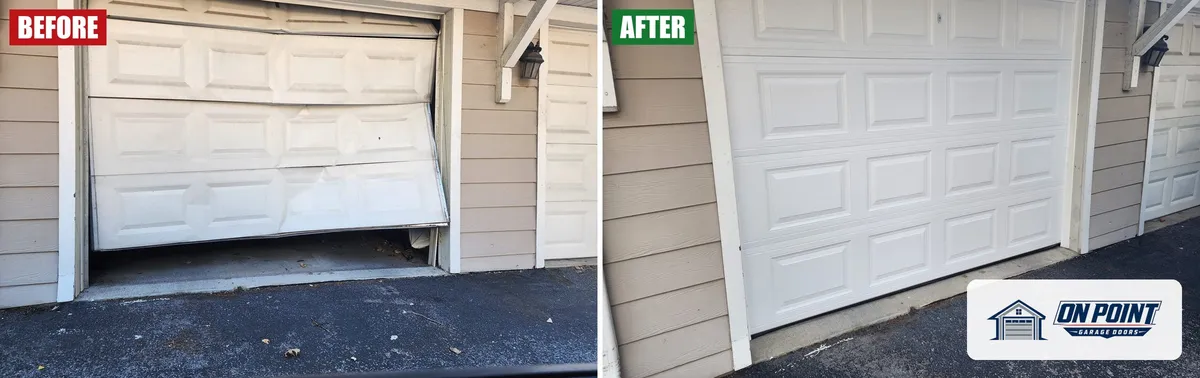
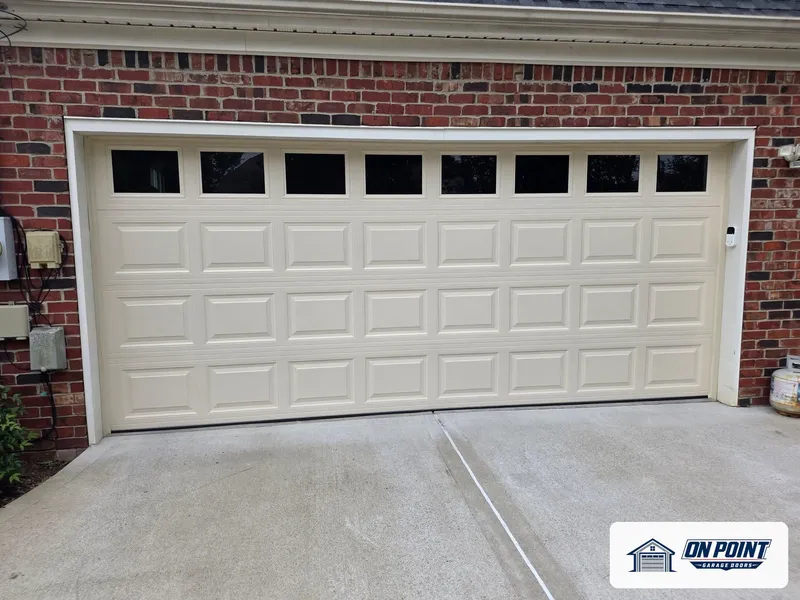
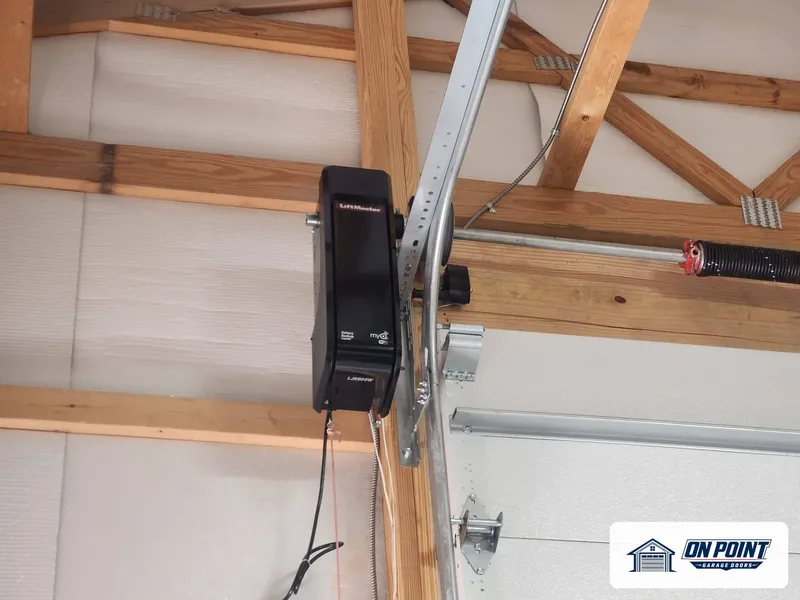
Dock doors in the industrial parks, bay doors at the tire and lube shops, storage rows off the connector, the back door a restaurant takes deliveries through: around metro Atlanta, a business door that sticks or won't latch stalls the whole day. Overhead sectional, rolling steel and corrugated roll-up doors are all repaired here, motors included, and the estimate is free.
Overhead sectional doors are the grown-up version of a home garage door: hinged steel panels, frequently insulated and sometimes glazed, that climb into tracks running back under the roof. A rolling steel door is built differently, a chain-mail curtain of slats that winds onto a pipe above the opening, with the counterbalance springs living inside that pipe. Corrugated roll-up doors, the ones on mini-storage and small bays, are the lightweights of the family.
Then come storefront grilles, counter shutters, doors still lifted by a pull chain and the electric operators on the rest. Each design has its own favorite failure, so the first few questions on the phone aim to pin down which one is on your building.
Nothing is more urgent for a business owner than a building that can't be locked at the end of the night, and that call is handled as the priority it is. Mention it up front, and routine work waits.
At the door, step one is getting the building closed and secure, even when a part must be ordered before the job can be finished properly. A spring that snapped with the door halfway up, a cable gone on one side, or slats that popped out of a guide can usually be made safe and latched on the first visit, with the permanent fix booked once parts arrive.
If a door has dropped crooked or hangs by one cable, keep people and vehicles clear of it until the technician arrives. A door under uneven tension can shift without warning, and the safest move is to leave it exactly where it stopped.
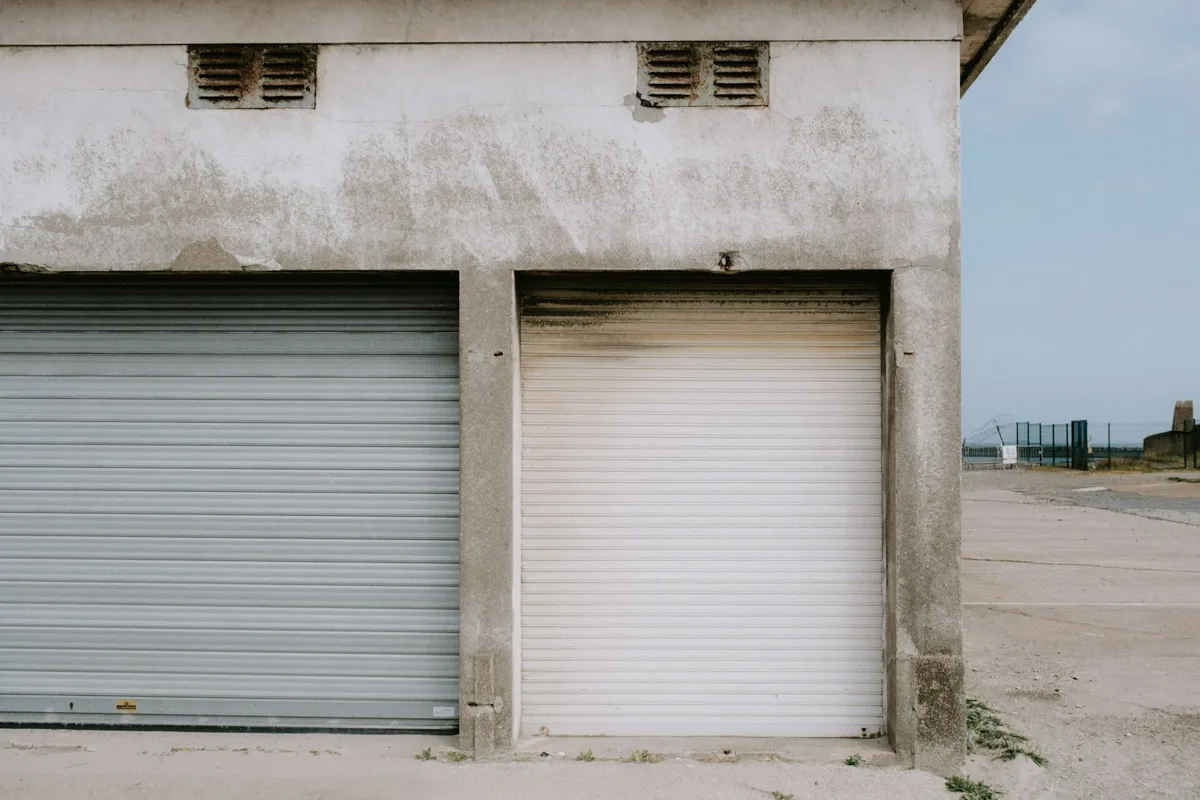
Home garage doors lead easy lives next to a busy bay door that can cycle more before noon than a house door does in a week. Each trip flexes the springs and works the cables, rollers and hinge pins, so the parts on a hard-working door are chosen for endurance: heavier springs rated for many more cycles, sized to the door's true weight.
Collisions do the rest. Trailers that back in at an angle, a forklift that raises its forks too soon or a pallet jack that clips the bottom panel can bend sections and knock tracks out of plumb, and one bent track binds the entire door. Georgia's humidity adds slow damage too, rusting the cables and bottom brackets where rainwater pools along the threshold.
Business-grade operators come in a few families. Rail-style units tow the door like a heavy-duty home opener, side-mount units bolt beside the opening and drive the spring shaft, and hoist-style units hang a chain so staff can crank the door during a power cut. Control usually comes from a wall station with open, close and stop buttons.
Many doors carry a pressure-sensitive strip along the bottom edge that sends the door back up on contact, and others rely on a beam across the opening. When a door halts midway, reverses with nothing there or overruns its stops, the fault normally sits in those safety devices, the limit settings or the control board, and all three are gone over on every operator visit. Doors still raised by chain can be motorized, with buttons mounted where your crew actually stands.
Comfort inside a building leaks out at the edges of its doors. A cracked bottom rubber invites rain, leaves and mice under a closed door, torn side seals let air-conditioning stream out of a warehouse all summer, and a dock door that no longer seats tight on one side turns that bay into the hottest corner of the building.
Fresh seals and weatherstrip go on during repairs, and insulated panels are worth considering when a damaged section is being replaced anyway. Restaurants, taprooms and car showrooms often open onto a patio or the sidewalk through glass sectional doors, and those get the same care: cracked lites replaced individually, frames and rollers inspected, springs set for the weight of the glass.
Nobody wants a technician blocking the dock during the morning delivery rush. Early-morning or after-close appointments can be arranged, and work on multiple doors is grouped into one visit to keep disruption low.
Property managers looking after several sites can send a list of doors and addresses, and the estimate breaks out every door separately so you choose what happens now and what waits. Summer storms are rough on operator boards when the power surges back, so a surge protector for each operator is worth bringing up while we are on site.
From a single storefront grille to a line of dock doors, each call follows these steps.
Yes, from the springs inside the barrel to slats, guides, bottom bars, locks and the motors that drive them.
Rarely. Bent panels and track pieces are usually swapped individually, which leaves the undamaged parts of the door in service. You hear what can be saved before any work begins.
Yes. Early and late appointments are available, and multiple doors on the same property can be handled on one trip.
Call and say so. A building that can't be secured goes to the front of the schedule, and the first task is getting that door down and latched.
Usually. The springs and balance are checked first, then an operator sized for that door is installed, with the controls placed where your staff need them.
Standard springs wear out fast on a door that opens all day long. High-cycle springs wound for the door's real weight hold up much longer on a busy opening.
Yes. Unit doors get new springs, straps and latches, and bent curtains are straightened or replaced.
Yes. Worn bottom rubber and side seals are replaced as part of the repair, and insulated panels can go in where damaged sections are being changed anyway.
Yes. Each door is inspected and you receive a written estimate at no charge, with every repair on its own line, before anything is done.
Explain what the door is doing and we'll say, honestly, whether today is necessary. Free estimate wherever you are.
Rather say it out loud? Call (770) 629-9647.
Tell us what's happening. Free estimate, nothing owed.