
Takes 30 seconds. We call you back to set a time.
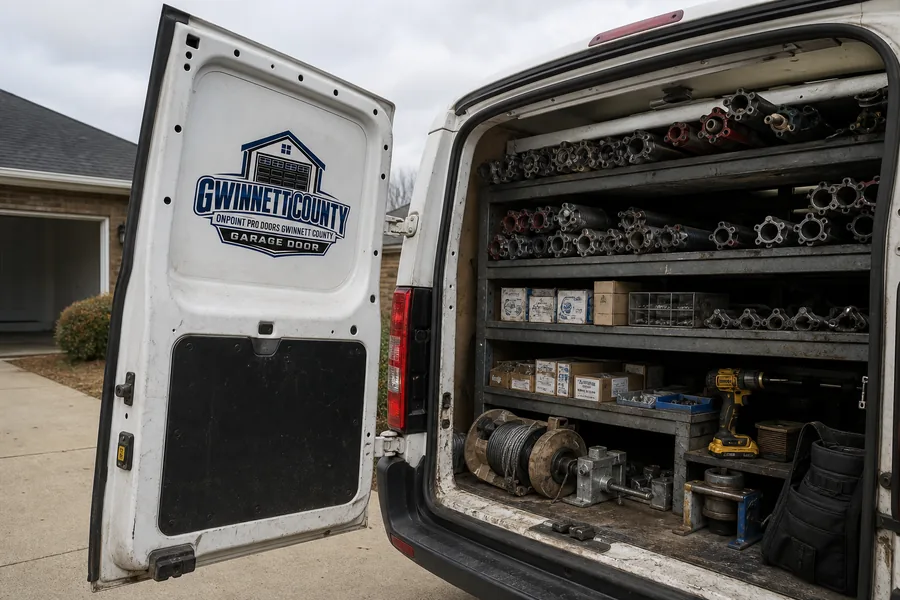
Every photo here is from our own work, with our logo on it.
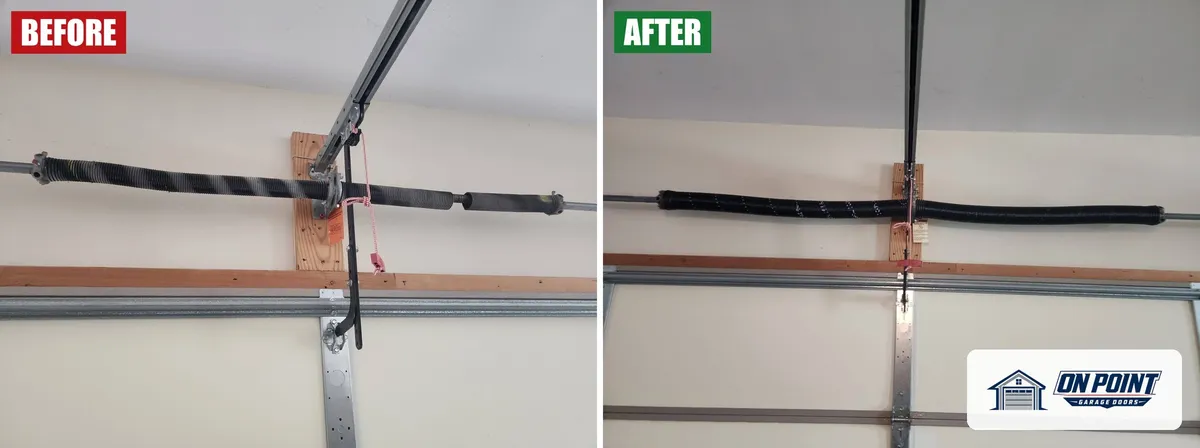
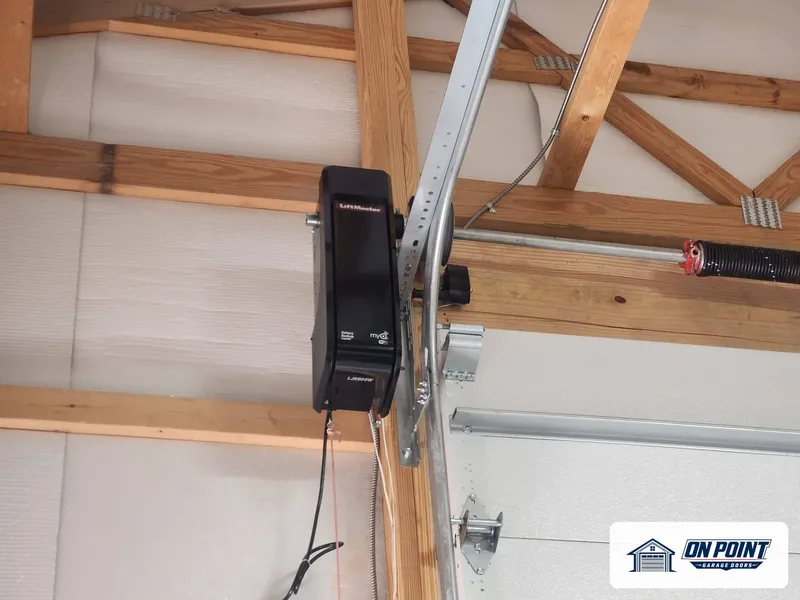
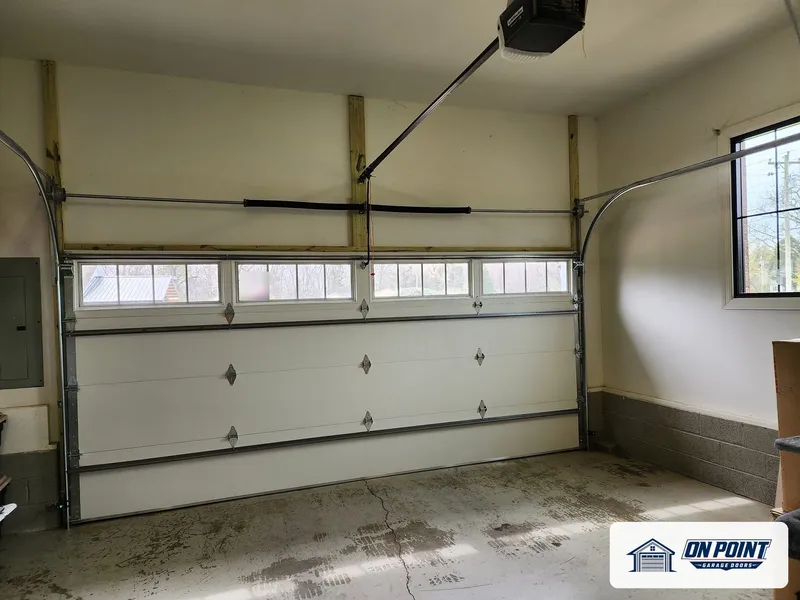
A huge number of metro homes put a bonus room, a media room or a kid's bedroom right over the garage, and that makes the drive inside a new opener the first decision, well ahead of the brand. Here's what separates belts, chains, screws and wall-mounted units, and why the door gets inspected before any of them.
A ceiling-mounted opener is a motor near the back wall, a rail running toward the door, and a trolley riding that rail, hooked to the top section by a bent arm. The drive is whatever pulls the trolley: a roller chain, a rubber belt wrapped around steel cords, or a long threaded rod.
Wall-mounted openers do without the rail. They bolt beside the door and rotate the torsion bar directly, which leaves the ceiling clear for storage, a lift, or simply a cleaner look.
In the metro we put in belts far more than anything else, because so many garages share a wall or a ceiling with living space. Chains still make sense for detached garages, and wall units win where the ceiling is already spoken for.
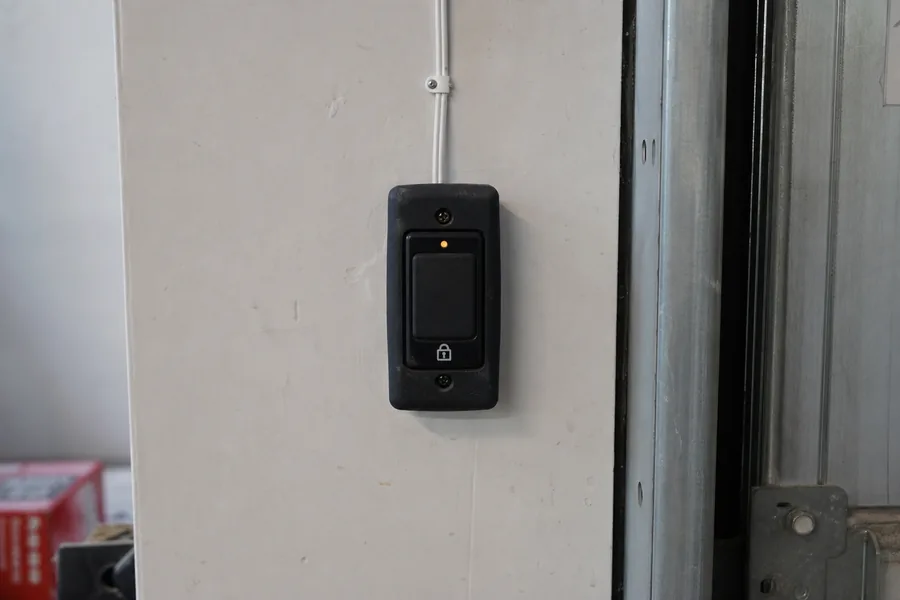
A detached garage out back is still a fine home for a chain drive. A garage under living space should get a belt, every time.
Heat is the other metro factor. A garage facing the afternoon sun can climb well past the outdoor temperature in July, and electronics last longer when the motor isn't laboring against an unbalanced door.
Townhome rows with a shared wall get the same advice: the neighbor hears a chain drive too.
Every new opener goes up the same way.
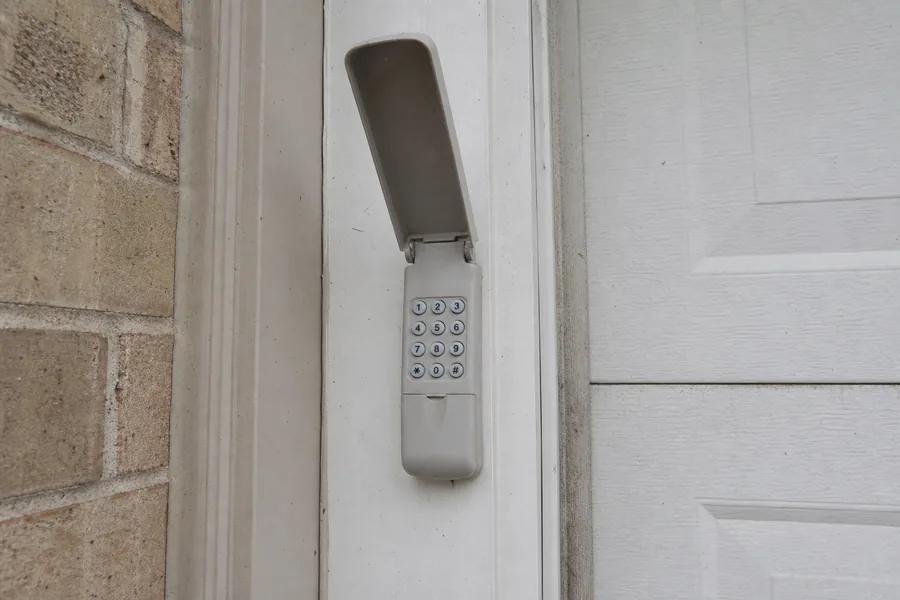
LiftMaster, Chamberlain and Genie now build Wi-Fi into most of their range: you can see from anywhere whether the door is open, close it from your phone, and get a notification whenever it moves.
Timer-to-close earns its keep in busy households, shutting a door that the last person through forgot.
Some Wi-Fi models also accept in-garage package delivery from certain retailers.
Backup power is the add-on we suggest most in the metro. Summer thunderstorms knock the power out regularly, and a battery keeps the opener running for a number of cycles so nobody is stuck inside.
A surge protector at the opener's outlet is worth the small addition too; lightning season takes out opener boards every year.
People usually ask by name for the LiftMaster belt units with battery backup and Wi-Fi, or the quiet Genie belt models. Both are solid; how long any opener lasts comes down to the door it's pulling.
Horsepower labels mostly sell boxes. A balanced single door needs little; heavy doubles and insulated doors suit the larger class. No amount of horsepower cures an unbalanced door.
A few intown garages still run screw-drive units from decades ago; parts are getting scarce, and a belt unit is the usual replacement.
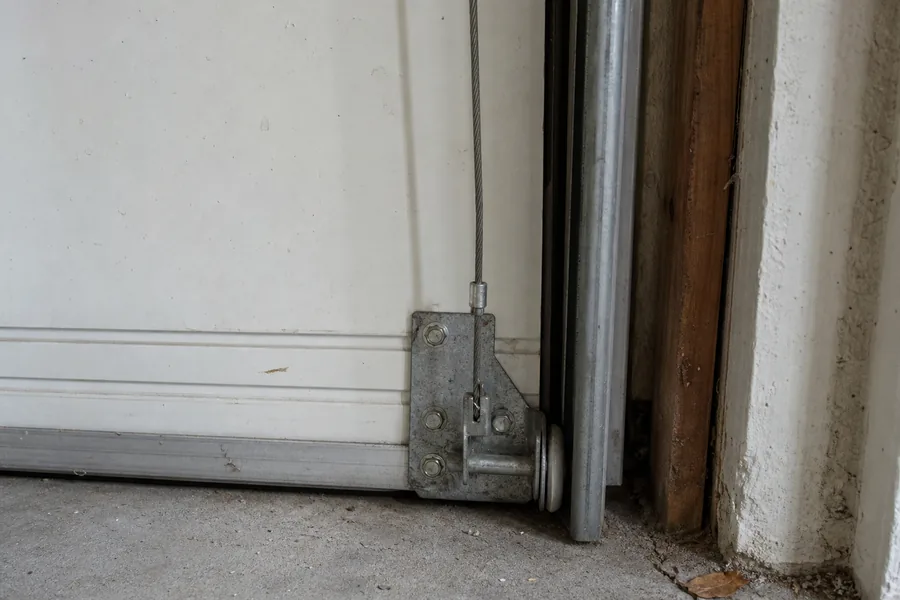
Quite a few calls for a new opener end without one. The old unit is laboring because a builder spring has weakened, a cable is fraying at the bottom bracket, or rollers have rusted in the humidity. Fix those and the old opener often carries on.
It's a familiar pattern in nineties subdivisions: original springs and cables, a replacement opener already on its second life, and a door that mostly needs its hardware renewed.
Estimates are free. You hear what the door needs and which opener fits before anything is decided. Declining is always fine.
"Belts can't pull heavy doors." Reinforced belts are rated for heavy doubles. The springs set the real limit.
"A stronger motor fixes a slow door." A slow, straining door is out of balance, and a stronger motor only takes longer to fail.
"Wi-Fi openers need a monthly plan." The basic apps are free; paid tiers add extras like video storage.
"The old rail can go back up." Seldom. A new opener arrives with its own rail, and the whole assembly is installed together.
Yes. The bonus room is exactly where a belt's quiet shows, while a chain rattles the rail and the ceiling with it. Townhomes with a bedroom beside the garage wall notice it too.
Almost always, once the door is balanced. Springs, cables and rollers are checked before anything else. Rusted bottom brackets are common after years of humidity and get replaced when found.
Most of an afternoon, including linking every remote and car and proving the safety reverse. If a builder spring or a frayed cable turns up first, that's handled on the same trip when the part is aboard.
A wall-mounted unit sits beside the door and drives the torsion bar, leaving every rack where it is. It needs torsion springs, which most metro doors have. Wall units also free up headroom for tall vehicles and roof racks.
Yes, anywhere in the metro, and you hear what the door needs before anything is decided.
Often. A dead opener with both cars inside is handled as urgent. Say so when you call, and mention a bonus room so the right unit comes along.
Sandy Springs to Lawrenceville, a single call sets up an arrival window already padded for traffic, and the technician phones on the way.
Free estimate across the metro, including Decatur, Sandy Springs, Dunwoody, Roswell, Marietta, Kennesaw, Johns Creek, Douglasville and Gwinnett.
Tell us what the current opener is doing and we'll say straight out whether the door needs work first. Estimates are free anywhere in the metro.
Rather say it out loud? Call (770) 629-9647.
Brand, age and what it's doing. We don't bill for estimates.