
Takes 30 seconds. We call you back to set a time.
Every photo here is from our own work, with our logo on it.
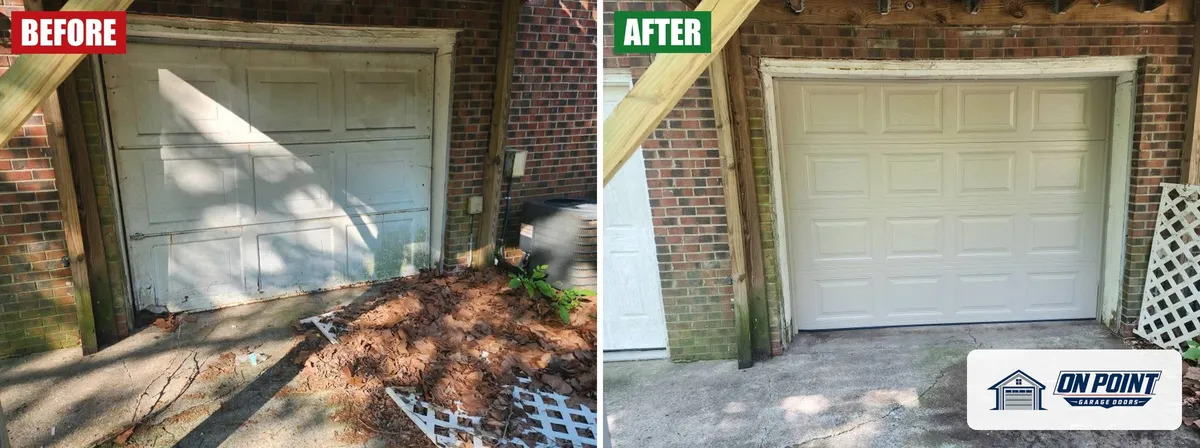
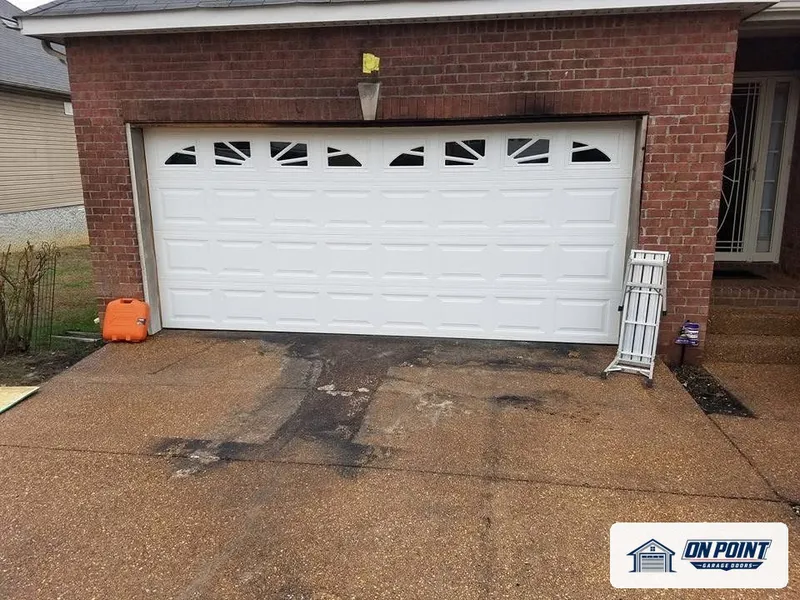
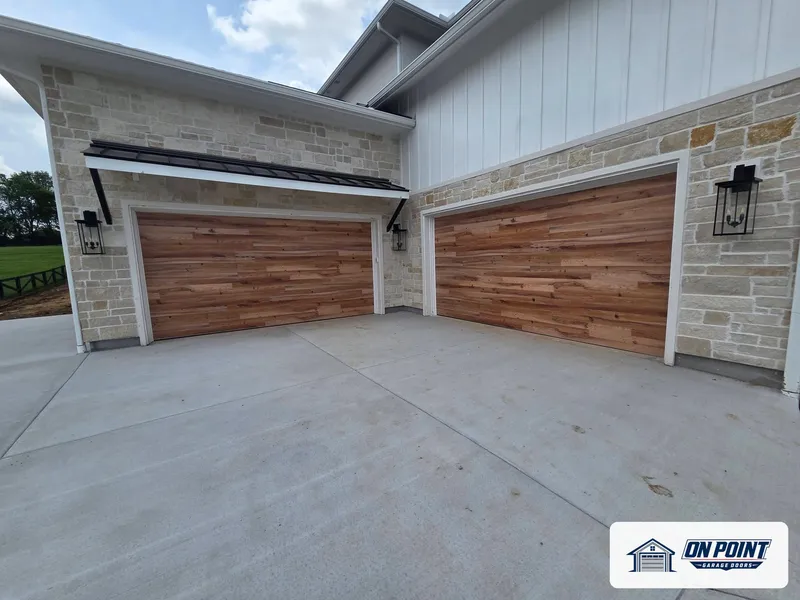
Swap a solid garage door for a full-view one and the whole front of the house changes: daylight pours into the bay, and at dusk the garage glows. Around metro Atlanta that suits a modern build, an intown renovation or a garage that has quietly become a gym or a studio. We measure, walk you through frames and glazing, supply what your HOA wants to see, and hang the door. The estimate is free.
Take away the stamped steel panels of an ordinary sectional door and replace them with slim aluminum rails and stiles, each one holding a pane, and you have a full-view door. Under the skin it is still a sectional door: the same style of track and rollers, torsion springs over the opening, and an everyday opener with a wall button.
Frames are typically offered in clear anodized aluminum, black, bronze or white, and the pane layout can be a few big lites or many smaller ones. Black aluminum with clear glass looks crisp and contemporary on a new build; white frames with frosted lites sit more gently beside red brick and a traditional front porch.
The garages that get the most out of glass are the ones people actually spend time in: a weight room, a pottery wheel or a woodworking bench, a detached garage reborn as an office, a bay that opens toward the backyard pool. All of them gain a kind of daylight a narrow strip of windows never delivers, and on a modern facade with flat planes the door can become the strongest line on the house.
Glass is a poorer match for a bay packed with boxes that faces a busy road, or one that has to stay cool beneath a bedroom. There, a steel door with a single row of lites across the top panel captures much of the light with far fewer trade-offs, and both are shown next to each other at the measuring visit.
Clear glass hides nothing, which is lovely for a garage gym or a restored car and awkward for a bay full of bikes, coolers and paint cans. Frosted, satin and other obscured lites pass daylight while turning the inside into soft shapes, and a tinted pane trims glare along with some of the summer heat.
Mixing is allowed: obscured lites low, where people pass on the sidewalk, and clear ones up high to keep the sky. Think about evenings as well, because with the overhead lights on, a clear door puts the whole garage on display to every passing car.

Aluminum and glass don't swell, rot or go soft in a muggy Georgia summer the way painted wood does, and the frames stay true in a garage that holds damp air for months at a time. On that score, glass is an easy fit for the climate.
The sun is the catch. A clear door facing west turns into a solar collector by four o'clock. Tinted lites and insulated double-pane units take a real bite out of that heat gain, and tight side and bottom seals keep cooled air inside when the garage is part of the living space.
Honestly, even a top glass door will not hold temperature as well as a steel door with a foam core. If there is a bonus room overhead, we talk through that trade before anything is chosen.
Few changes alter a facade as much as a full-view door, so most subdivision and townhome boards ask to review one before installation. Expect questions about frame color, glass type and the pane pattern.
We assemble the manufacturer's spec sheet and finish details for your application, and nothing is ordered until the board's approval is in hand. When a board turns down clear glass, frosted lites or glass limited to the top panel are the compromises that usually pass.
Townhome rows tend to be the strictest, because every unit's door is meant to match the one beside it. If your row has an approved door already, the glass version is chosen to sit comfortably next to it, and the board sees how it will look in the context of the whole building.
Because each glass door is made for one opening, the sequence matters.
A glass-and-aluminum door outweighs a steel door of the same width, sometimes by a lot once insulated or laminated glass is added. The springs are wound for the door actually hanging there, which is why it gets weighed and balanced after installation, and why an older opener may need replacing to lift it without straining.
Most full-view doors use tempered glass, the safety kind that crumbles into small, blunt pieces instead of sharp shards. Laminated glass clings to its plastic inner layer if it cracks. Polycarbonate weighs less and shrugs off a stray baseball or a pine branch flung by a storm, though it marks more easily than glass. And if a single lite ever breaks, that one panel is swapped, not the door.
It is, with safety glazing. Tempered lites crumble into small blunt bits, laminated lites stay in one piece when cracked, and polycarbonate is very hard to break. The door keeps the usual floor sensors and auto-reverse too.
Through clear glass, quite a lot, especially after dark with the lights on. Frosted, satin or tinted lites blur the view and still let the daylight in.
A clear door on the sunny side does. Tinted or insulated double-pane lites cut the heat gain noticeably, though a foam-core steel door still insulates better.
In most communities, yes. The spec sheet and finish details are prepared for your application, and the order waits for the approval.
That single panel is replaced with matching glass and frame finish, and the rest of the door keeps working as before.
Often an ideal one. A detached studio, workshop or pool-side bay gains daylight and rarely needs the insulation of a garage under a bedroom.
Maybe. It is checked against the new door's weight at the measure, and if it would labor, a stronger unit appears as a separate line for you to decide on.
Yes. After the opening is measured and the choices are talked through, the estimate is written up at no charge, well before anything is ordered.
Explain what the door is doing and we'll say, honestly, whether today is necessary. Free estimate wherever you are.
Rather say it out loud? Call (770) 629-9647.
Tell us what's happening. Free estimate, nothing owed.