
Four faults cover almost all of it. Photo eyes, drive gear, limit switch, logic board. Three of the four are a part and an hour.
Tell us what the door is doing. The estimate is free and it comes first; nothing starts until you've seen it.
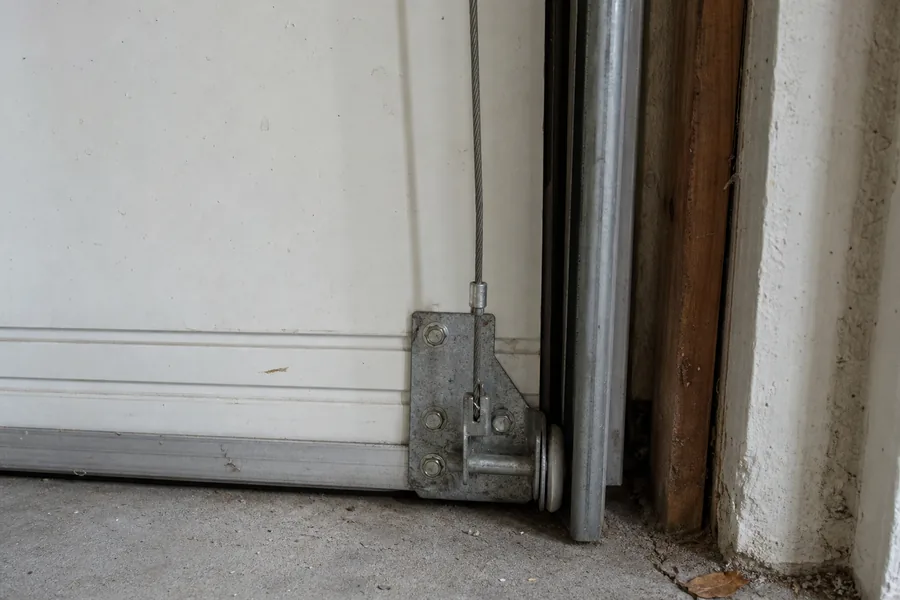
When an opener that will not run happens in Atlanta it happens without warning. The parts that fail are the ones under constant load, and they go on an ordinary morning, not in a storm. Across Atlanta the pattern is consistent: humidity rusts cables and bottom brackets, and summer storms drop limbs and debris into tracks, and 1990s two-story brick-front homes with attached two-car garages in the subdivisions, older ranches with carports converted to garages take the worst of it.
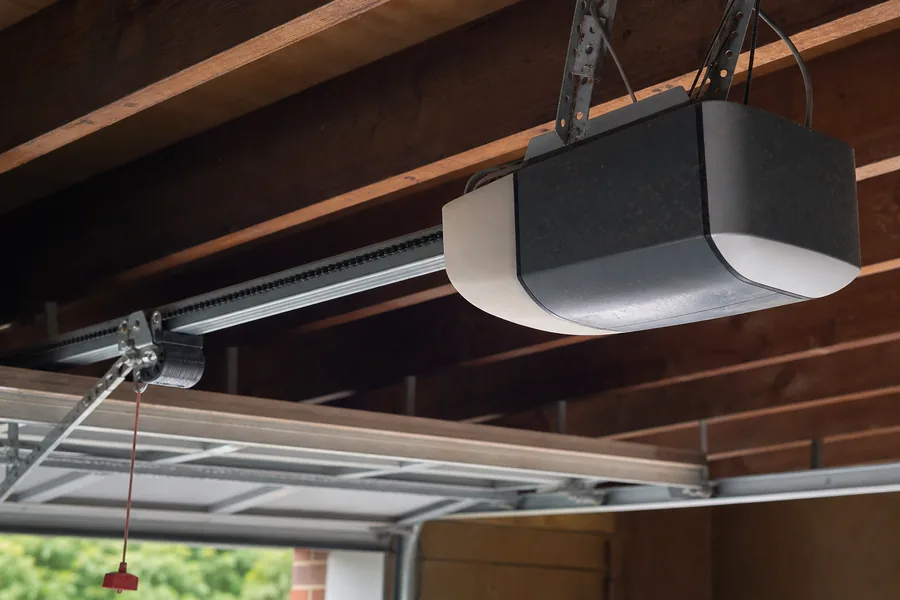
An opener doesn't lift anything. The opener positions a balanced door and keeps it where it's put. The motor turns a worm that drives a nylon gear, and that gear is soft by design. Designed to be the first thing to fail, because a stripped gear is an afternoon and a burnt-out motor or a torn-off bracket is not.
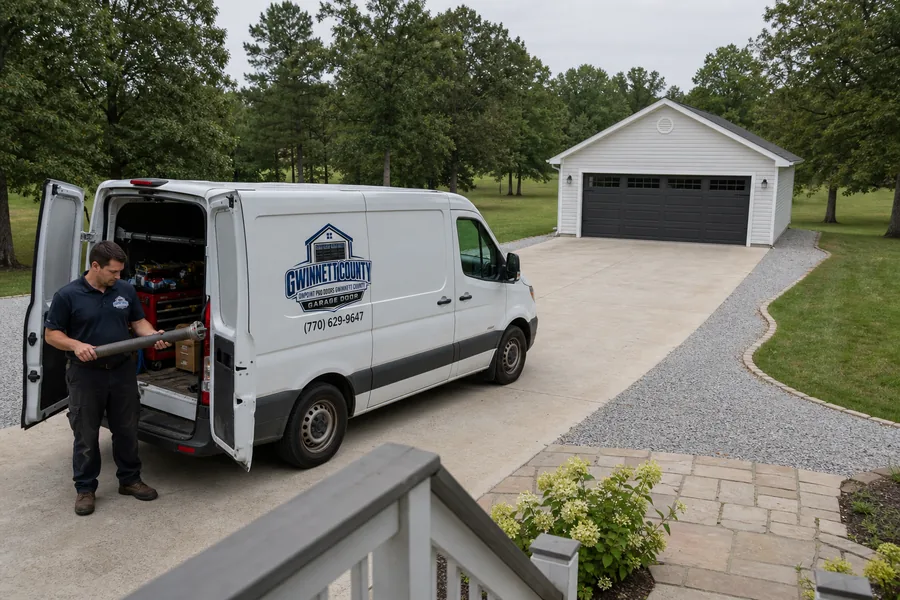
The van covers Atlanta and Dunwoody, Sandy Springs, Marietta, Kennesaw, Johns Creek, Douglasville daily. We give you a two-hour window rather than a day, a free estimate, and what you agreed on the driveway is what happens.
The tell is the mismatch between sound and movement. Press the button, the motor runs at its normal pitch for the usual few seconds, and the door doesn't twitch. Stripped gear. A gear kit fixes it for a fraction of a new opener. Look up at the rail: the trolley isn't moving either.
Any of that ring true? Open the door, give a technician ten minutes, and you'll have the answer. No phone guesses. The estimate itself is free.
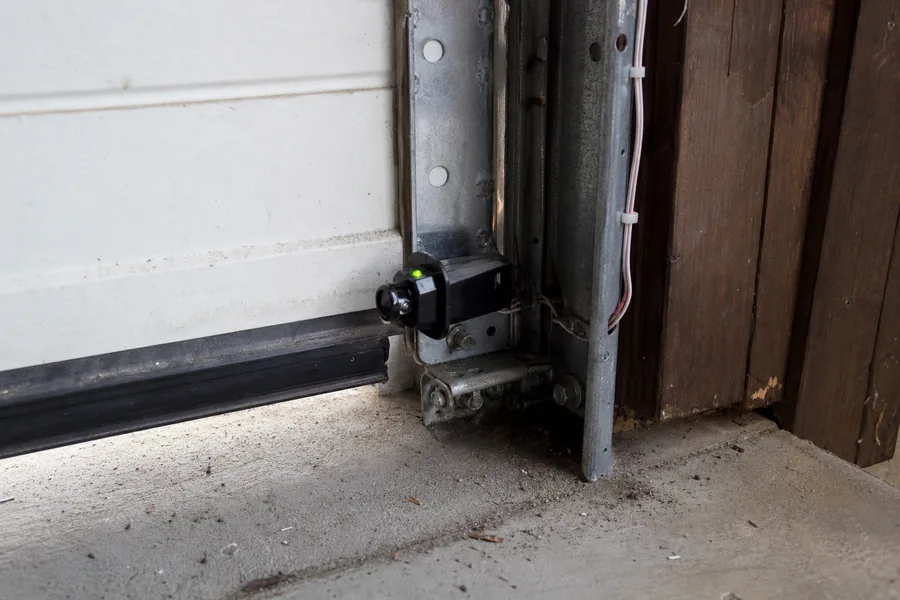
Safety reversal is the part that matters. Every opener sold since 1993 has photo eyes near the floor, and a door that doesn't stop and reverse when the beam breaks is not a nuisance fault. It's the safety system not working. Every visit includes a reversal test, called for or not.
For once, the best action is no action, which surprises most people. A failed door doesn't get worse sitting still. It gets worse each time somebody presses the button to check whether it's still broken.
The one exception is getting a car out. Release the opener with the door fully shut, lift with your legs, and stop at once if it feels heavy. If it feels heavy, the counterbalance isn't working and the door will drop on its own.
Most people postpone it; here is what the postponement tends to bring. None of the following is unusual. That's the usual order of events; we see it most weeks.
It is a free estimate. Knowing where you stand is free. Which is why early beats late every time.
No. The opener only guides the door, and treating it as the muscle is how people wreck them. The spring carries the weight. The opener just guides a balanced door along its travel. A straining opener points at the spring. Swap the opener and you'll be back where you started.
Most opener calls come down to four faults: misaligned photo eyes, a stripped drive gear, a limit switch that has drifted, or a dead board. For three of the four, it is one part and an hour. Which one of the four you have is settled first, in front of you.
The frequency matters and so does the code generation. A new Security+ 2.0 remote won't talk to a 315MHz opener from the nineties, and the old remote won't talk to a new head either. Give us the model number from the label on the motor housing and the correct part comes on the van.
None of that is unusual. Guessing at a door from a description produces that result more often than not, which is why nothing gets said here before a technician has seen it.
A chain-drive opener runs 12 to 15 years. A belt drive runs about the same but quietly. Openers die young from overwork, not age: a weak spring makes the motor work several times harder than intended, on a plastic gear.
Four faults cover most of what we see: photo eyes knocked out of line, a stripped drive gear, a drifted limit switch, and a failed logic board. The first three are a part and an hour. Only the fourth sometimes means a new opener, and you'll know which one it is before deciding anything.
Fifteen years old and a failed board: replacing the unit is almost always the straight answer. Modern units run quieter, pair with rolling-code remotes, and are warranted on their own. You'll hear it straight instead of being sold a board for a dead unit.
Yes, on parts and labor. If the same fault comes back within the warranty period, we return and sort it.
Repair, nearly always. Eyes, gears and limit switches are parts that get swapped. The exception is a dead logic board on a unit past fifteen years, where a new head is the straight answer.
It probably did warn you, quietly. A slower lift, a hum before it moved, one miss in five. The last failure is just the one that got your attention.
Yes - Dunwoody, Sandy Springs, Marietta, Kennesaw, Johns Creek, Douglasville and the wider Atlanta area are all inside our normal service radius.
A garage door opener repair call is usually an hour and a half on site, and the door is back in use when we leave.
Yes, every hour of every day of the year. A car shut in at 5am before work is a same-hour visit, not a same-day one.
One phone call, a two-hour window, and a call ahead. No middleman selling your call to the highest bidder, and no phone-line diagnosis from someone who will never see the door.
Free estimate. Throughout the Atlanta metro and Dunwoody, Sandy Springs, Marietta, Kennesaw, Johns Creek, Douglasville.
A photo of the door from inside the garage, with the door closed, tells us most of what we need. Send it after the call if that's easier than describing it. It lets the tech load the right parts before leaving.
We need three things: a name, a number, and what the door is doing. Everything before you agree to it asks nothing of you, across the whole of Atlanta.
Rather say it out loud? Call (770) 629-9647.
Tell us what the door is doing. The estimate is free and it comes first; nothing starts until you've seen it.