
Takes 30 seconds. We call you back to set a time.
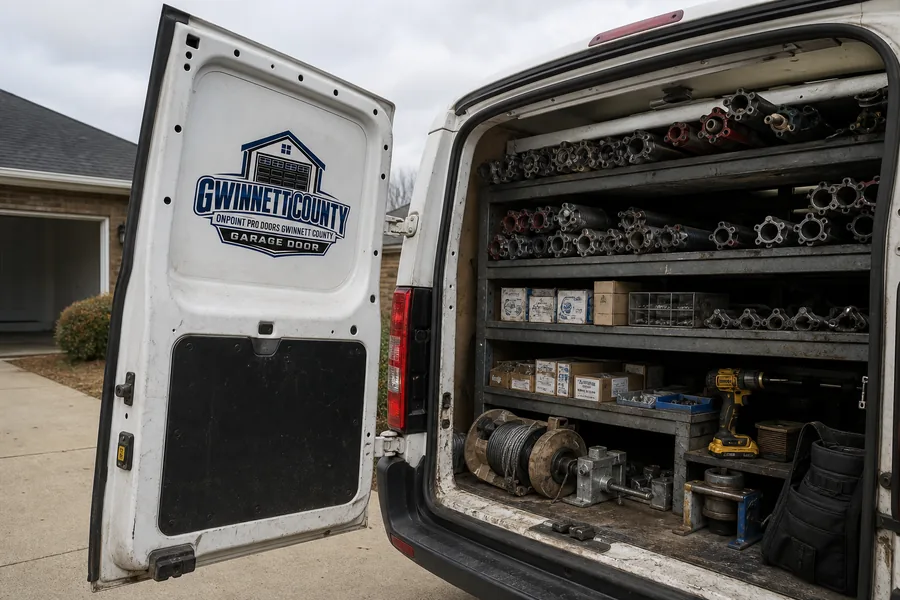
Every photo here is from our own work, with our logo on it.
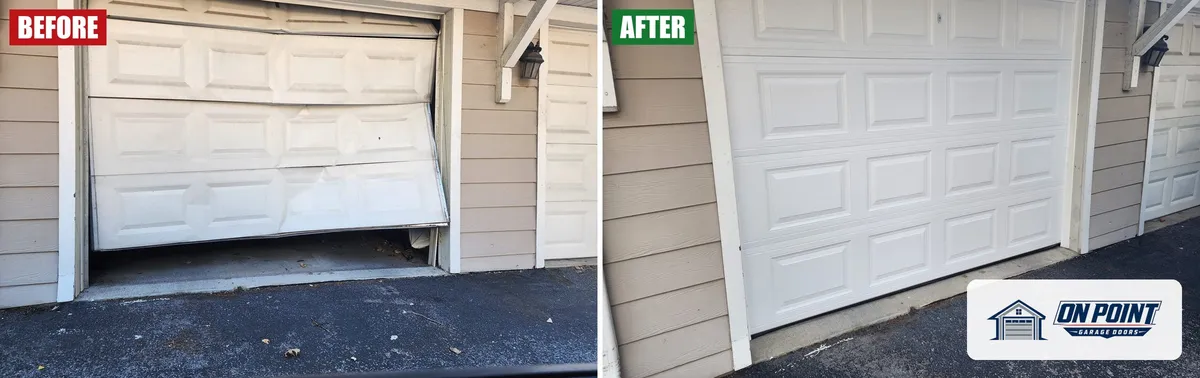
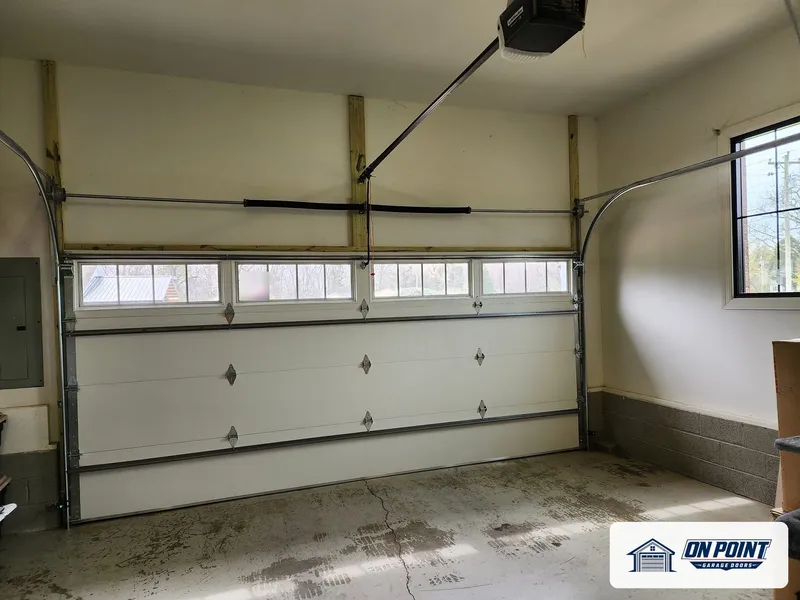
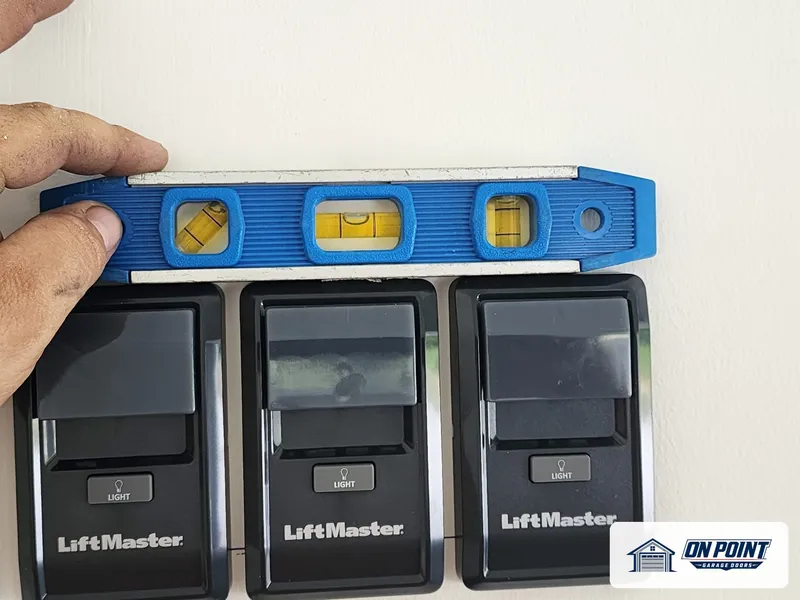
Most garage break-ins we hear about around the metro started with something small: a remote lifted from a car in the driveway, a keypad code shared with a contractor years ago, a door into the kitchen that nobody locks. Here's how we harden a garage, from free habits to one-visit hardware.
Very few garages are broken into by brute force. The easy routes are a remote taken from a parked car, a keypad code that's been the same since the builder set it, an emergency release that can be reached, and an interior door left unlocked because it feels like it's already inside.
Every one of those has a fix. Some are habits that take a minute; the rest is hardware we can install in one visit.
Townhome rows add one more: garages that open onto a shared motor court or alley, hidden from the street and from most of the neighbors.
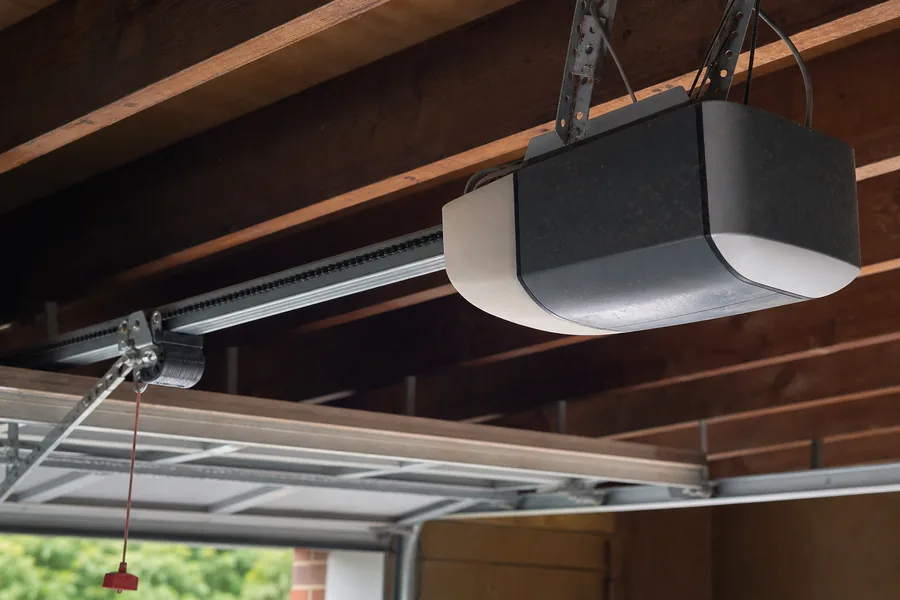
Hanging from the opener rail is a red cord that disengages the door so it can be raised by hand in an outage, and summer storms make outages routine here. It needs to stay. The weakness is that on some doors it can be reached from outside.
A shield around the trolley fixes that: the cord keeps working from inside during an outage but can't be reached from outside. It's a small part and one of the first upgrades we suggest. Shields are specific to the opener model, which the technician reads off the unit before choosing one.
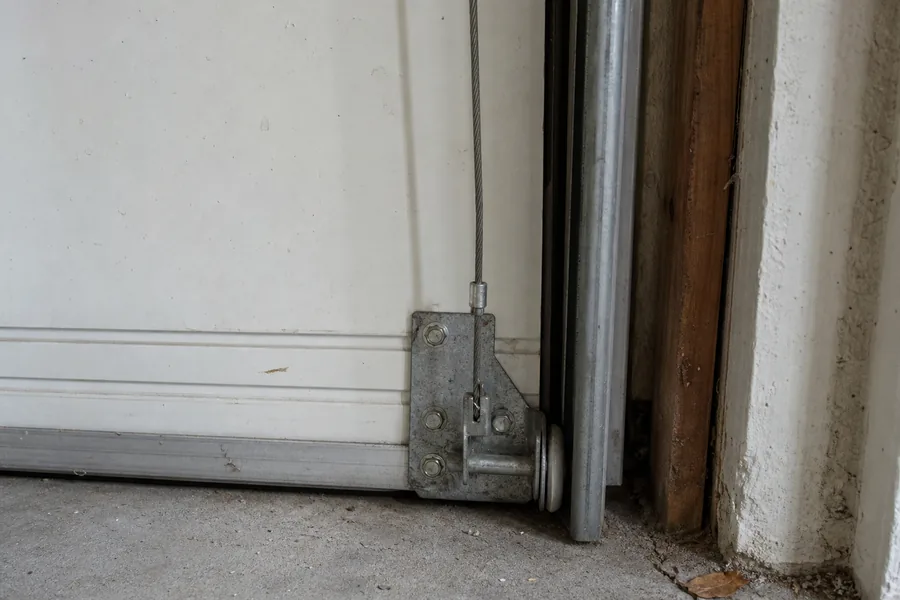
Habits first, then hardware.
Openers built from the late nineties on use rolling code, a signal that changes every time a remote is used. Earlier fixed-code units broadcast the same signal every time, and that signal can be captured and replayed. If your opener predates rolling code, replacing it outranks everything else here.
Replacement openers today are rolling-code as standard, and most include Wi-Fi alerts at the same time.
The technician can read the type off the motor housing during any visit and explain what a replacement would involve. Estimates are free.
Plenty of nineties homes are on their second opener, and some of those second openers were already old stock when they went in.
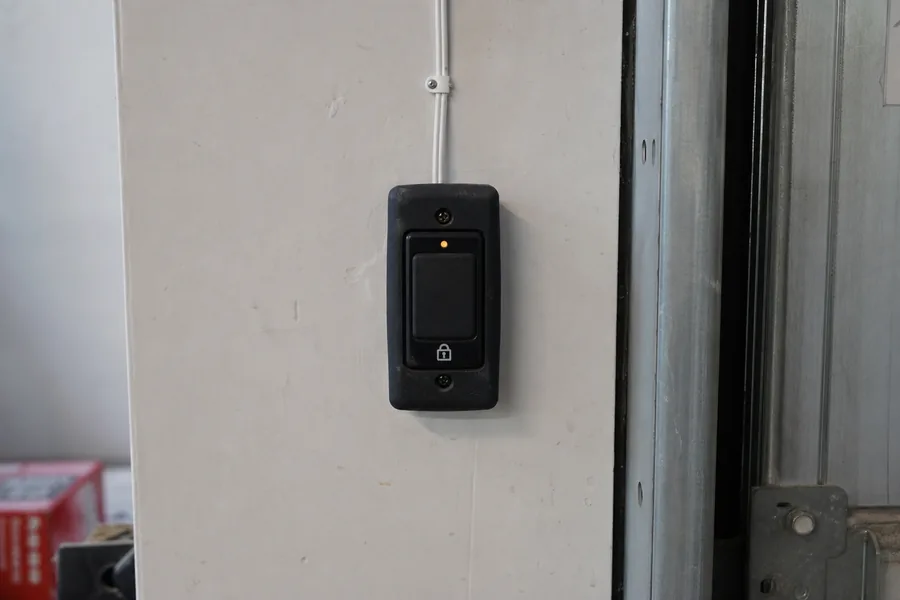
Before a trip: vacation lock on, slide bolt thrown, remotes brought inside, the interior door deadbolted, notifications turned on, and a neighbor who knows you're away.
Holiday travel and summer beach weeks are when this checklist earns its keep.
Coming home, pull the slide bolt before using any remote; an opener straining against a bolted door can wreck its drive gear.
Release shields, slide bolts, deadbolts and solid slabs for the interior door, windowless replacement sections, Wi-Fi openers and retrofit modules, and rolling-code openers to replace fixed-code ones. Most of it goes in during one visit.
For homes in HOA communities, anything that changes the door's appearance is noted on the estimate so the board can sign off before anything is ordered.
This site deliberately stays quiet on the methods people use to get into garages. The protections above are what matter.
"Shut means secure." Not with a reachable cord, a remote on the visor and an unlocked door into the kitchen.
"Smart openers are easy targets." Protected by a strong password, they're the safer choice, because you hear about every opening.
"Nobody uses the side entrance." Burglars do, precisely because nobody bothered to reinforce it.
Yes. The shield only blocks the cord from outside. Inside the garage it hangs and releases exactly as before.
If it turns out to be fixed-code, replace it. If it's already rolling code, it can stay. The technician checks on the visit.
Most sectional doors take one. It mounts in the track, and the opener gets set so it won't strain against a bolted door.
From the street it reads as frosted glass and still lets daylight through. If the HOA prefers, a matching solid section can replace the windowed one. Solid sections come in the common metro styles, so the door still matches its neighbors.
Yes, across the metro. You'll hear what we recommend and why, and saying no is fine. A side entrance or an old opener can go on the same estimate.
Often. These jobs are short, and a break-in on your street bumps them up the list. Tell us if the door itself was damaged, too.
Buckhead to Buford, a single call sets up an arrival window already padded for traffic, and the technician phones on the way.
Free estimate across the metro, including Decatur, Sandy Springs, Dunwoody, Roswell, Marietta, Kennesaw, Johns Creek, Douglasville and Gwinnett.
Tell us what's worrying you and we'll say straight out what's worth doing. Estimates are free anywhere in the metro.
Rather say it out loud? Call (770) 629-9647.
The opener's age, and whether there's a side entrance. We don't bill for estimates.