
Takes 30 seconds. We call you back to set a time.
Every photo here is from our own work, with our logo on it.
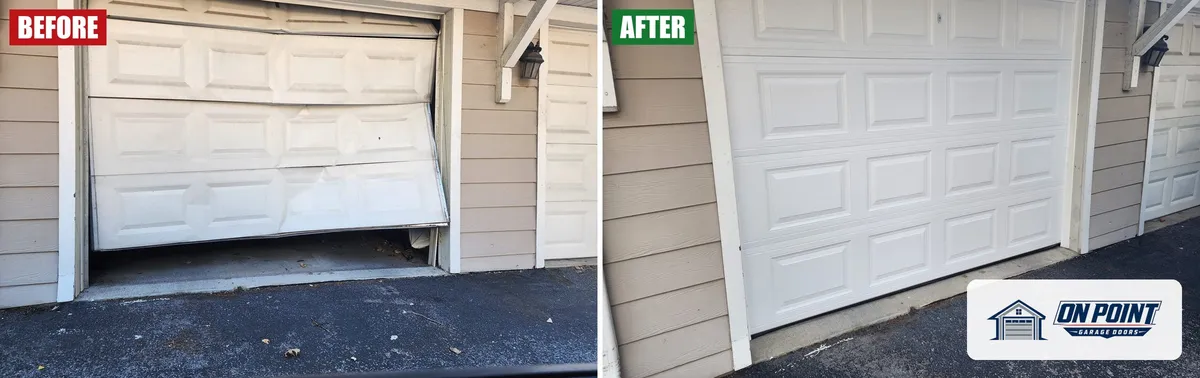
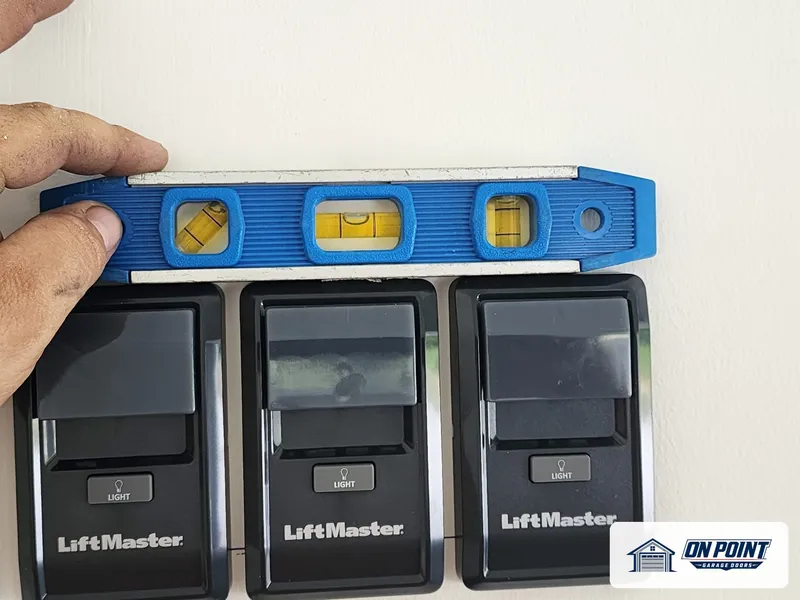
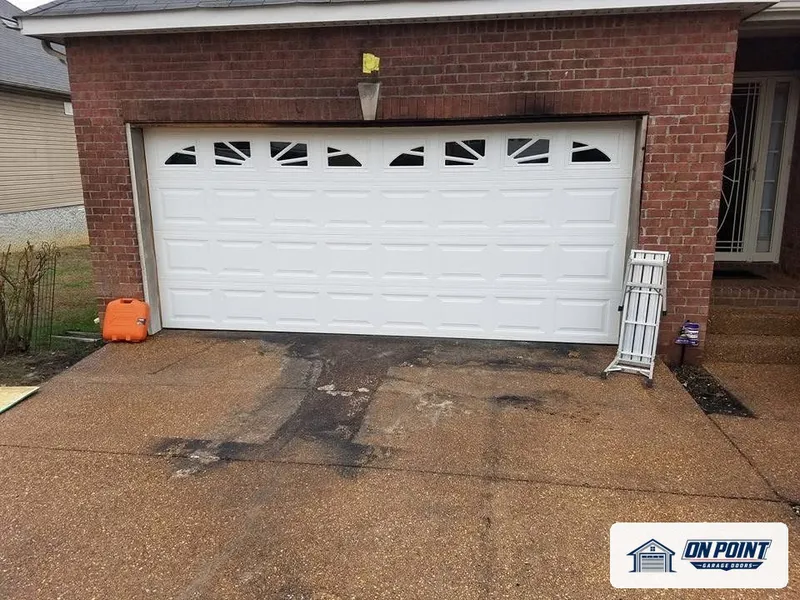
A door that runs several times a day in a hot, damp garage wears in small ways long before anything snaps. OnPoint Pro Doors tunes doors up across metro Atlanta: the balance, the springs and cables, the rollers and hinges, the opener's settings and the safety reverse, all gone over by a technician who tells you what he finds. The estimate is free.
The heart of a tune-up is the balance test. With the opener disconnected, the door is lifted by hand to about halfway and let go. A door in good balance stays put. One that drifts up or sinks is telling you the springs no longer match its weight, and every trip on the opener has been paying for that.
From there the technician works through everything that moves or carries load: the springs for rust and gaps between the coils, both lift cables down to the bottom brackets, every roller and hinge, the tracks and the bolts that hold them to the wall, the opener's travel limits and force setting, the photo eyes, and the bottom and side seals. The metal parts that rub against each other are lubricated with the right product for each one, and the door is run until it moves smoothly and evenly.
A tune-up often turns up a worn roller, a cracked hinge or a bottom seal that has baked hard and split. Those are carried on the truck, so the fix can happen on the same visit once you have seen the part and agreed to it.
Bigger findings, like a spring with deep rust at one end or a cable already losing strands, are written up with the reason rather than swapped on the spot. You decide whether to do them now or plan for them.
Noise is the first one. A squeal on the way up, a grinding from the rollers or a bang near the top of the travel all mean something has gone dry, worn or loose.
Then there's the way the door moves. Jerky travel, a door that hesitates before starting, one that closes slower than it used to, or one that reverses for no reason all point to a door the opener is fighting. A gap under one side when the door is shut usually means a cable or the slab, and a door that shakes the room above it is often out of balance. Any of these is a good reason to book a visit before it turns into a repair.
About the same on every door, so nothing is skipped.
Summer here does its damage slowly. Heat in a closed garage dries out the grease on rollers and hinges, and the long humid stretch rusts springs and the bottom ends of the cables. Storm season adds its own problems: limbs and debris in the tracks, and openers that come back from a power flicker with settings scrambled.
That is why many households book a visit ahead of the hot months and another once storm season has passed. The timing that suits your door depends on how often it runs and how exposed the garage is, and the technician will tell you what the wear on your door suggests.
Plenty of two-story homes from the nineties have a pair of single doors rather than one double. They were hung together and have done about the same work since, so a tune-up covers both. One door's wear is usually a preview of the other's, and seeing them side by side makes it easier to tell a tired part from a door that was simply set up differently.
Each door gets its own balance test, its own look at the springs and cables, and its own opener settings, and the findings are written up per door so you can see which one needs attention first.
In a townhome the neighbors share the wall, and over a bonus room someone hears every trip. A door that is balanced, with smooth-running rollers and hinges that are snug, makes a fraction of the noise of one that has been left alone.
A tune-up is often all it takes to turn a door that rattles the floor above into one that hums. When it isn't, because the rollers are steel with worn bearings or the opener is a chain drive under a bedroom, the quieter options are explained with the reasons.
A tune-up keeps a healthy door healthy and spots trouble early. It won't bring back a broken spring or a cable that has already snapped, and it isn't a substitute for broken spring repair when a door won't lift at all. If the visit finds a part that is close to the end, you get a free estimate for that repair on its own, and nothing is done without your yes.
The door is watched on the opener, balanced by hand, and every moving and load-bearing part is gone over: springs, cables, rollers, hinges, tracks, seals and the opener settings. It finishes with the safety reverse tested.
It depends on how often the door runs and how hot and damp the garage gets. A door that cycles many times a day wears faster than one opened twice a week, and the technician tells you what your door's wear suggests.
Not forever. Springs wear out with use. What a tune-up does is catch rust and wear early, so you can plan the replacement instead of finding the car shut in one morning.
Heat dries the grease on rollers and hinges, and humidity rusts bare steel parts. The technician lubricates the right parts and replaces rollers that are past saving.
Yes. The rollers, hinges, bearings and springs get the right lubricant for each part, and the tracks are left clean rather than greased.
Every time. The photo eyes are tested and the door is closed onto an object on the floor to prove it stops and reverses.
Not well. An opener that is set to push harder only hides a door that has gone out of balance. The door is put right first, and then the opener's force and travel are set to match it.
Yes. You hear what the door needs, and the free estimate comes before any work.
Explain what the door is doing and we'll say, honestly, whether today is necessary. Free estimate wherever you are.
Rather say it out loud? Call (770) 629-9647.
Tell us what's happening. Free estimate, nothing owed.