
Takes 30 seconds. We call you back to set a time.
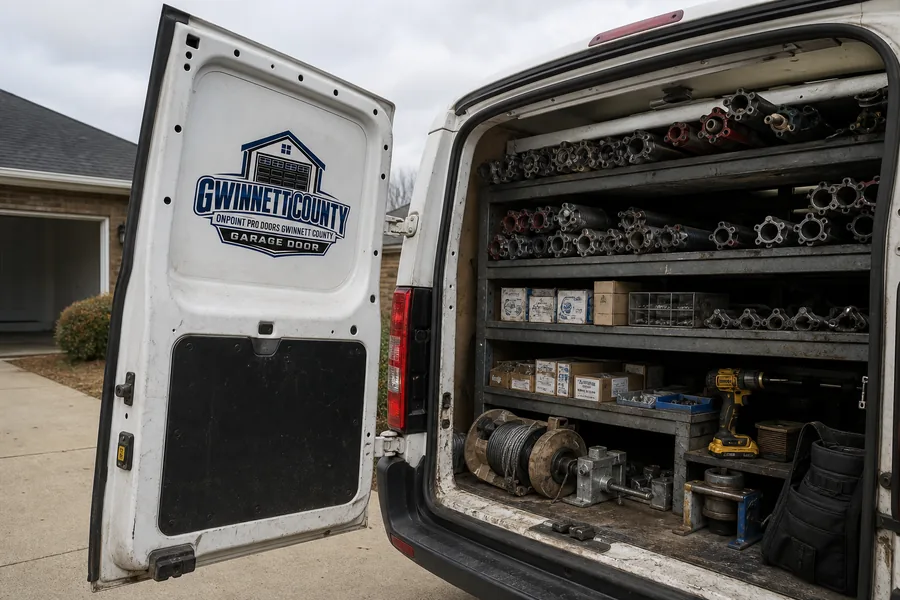
Every photo here is from our own work, with our logo on it.
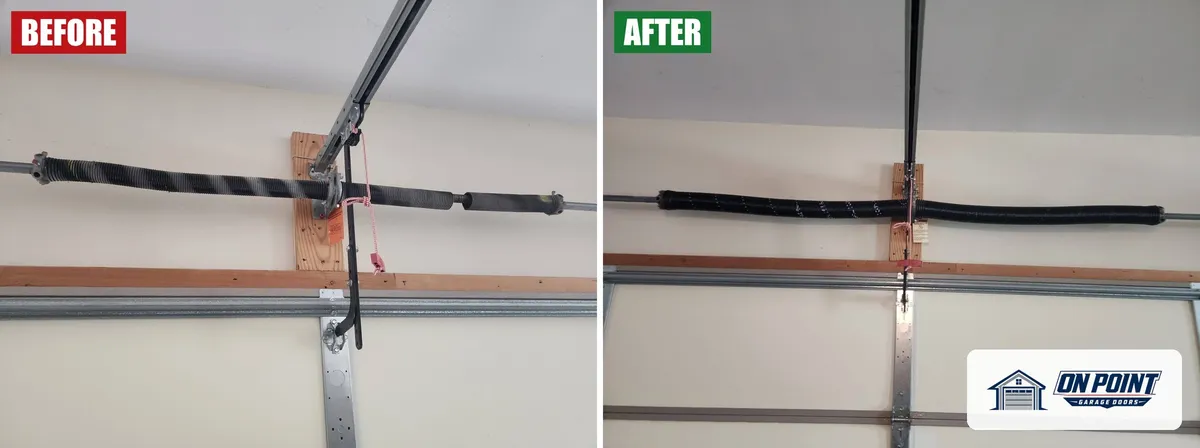
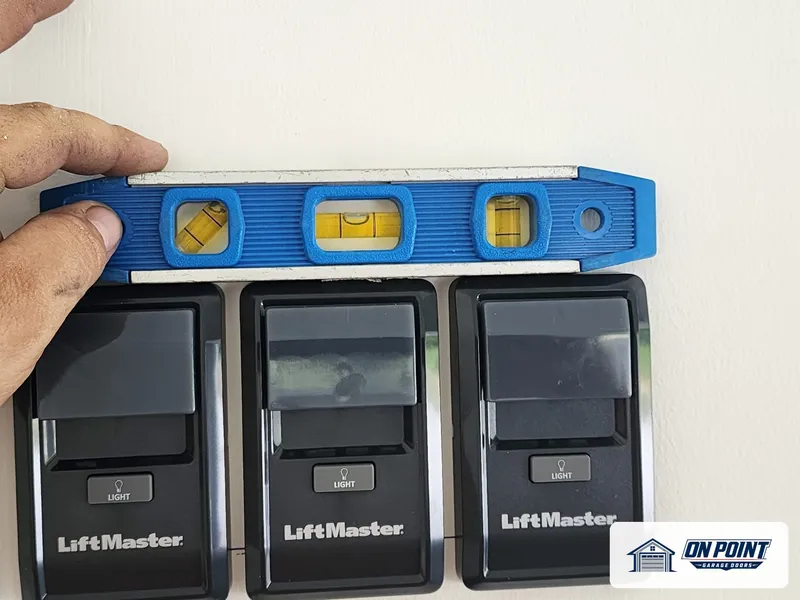
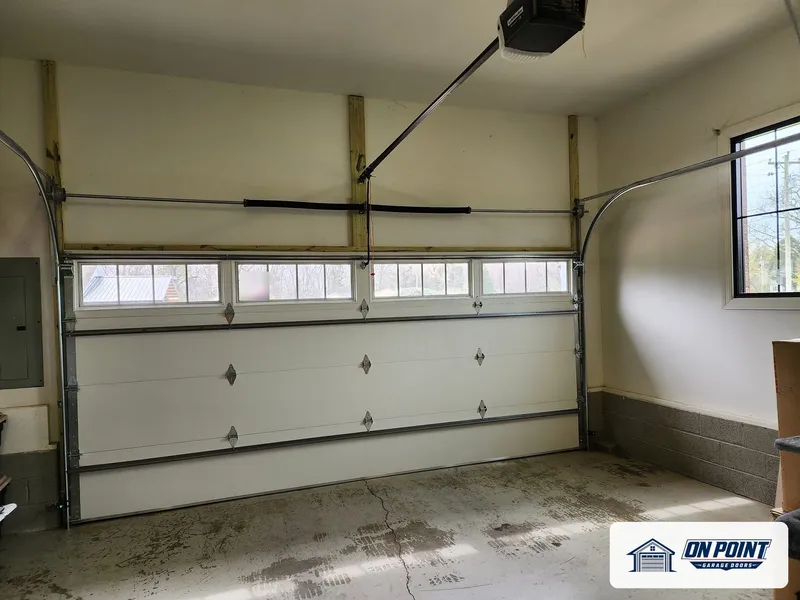
In April the whole metro wears a coat of yellow pine dust, and by July the air in a closed garage is thick enough to fog glass. Both land on the two small eyes at the bottom of your door, and both can stop it from closing. So can a thunderstorm surge or a recycling bin rolled a little too far in. Estimates are free.
Two small sensors face each other across the bottom of the opening. One projects a narrow infrared line; its partner on the far track expects to receive it without a break. Whenever the door is on its way down and that line is interrupted, the opener throws it into reverse. Residential openers sold in the U.S. have worked this way for three decades, and it's why garage doors rarely hurt anyone anymore.
It also means a door that keeps bouncing back up is usually telling the truth as it understands it. Something, real or imagined, sits in that infrared line. Our job is working out what the sensors think they see, which is almost never a reason to replace the opener.
In a metro where two cars, a stroller and the lawn crew's gear often share one garage, that line gets crossed far more than people realize.
Leave the settings alone. Describing the lamps when you call is plenty, and it tells the technician which parts to load.

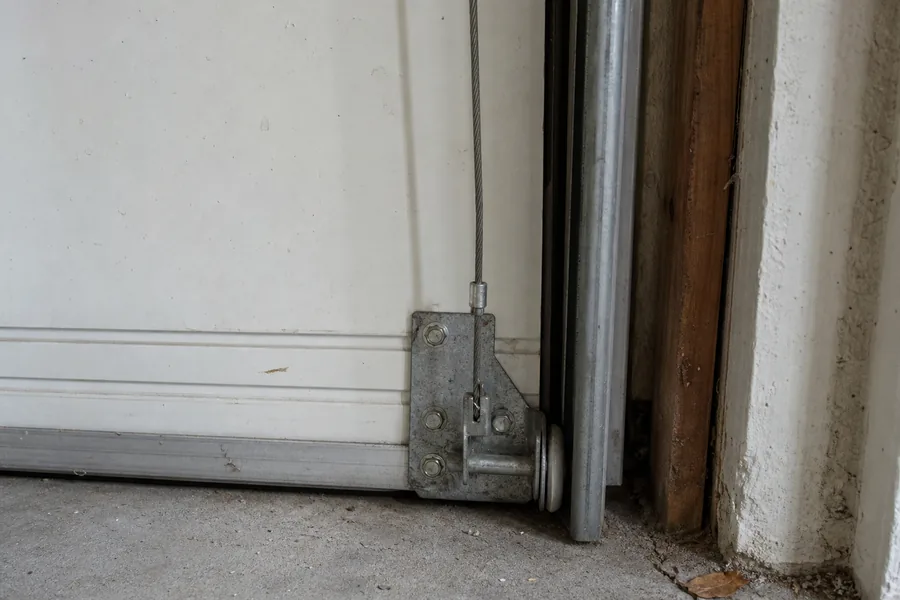
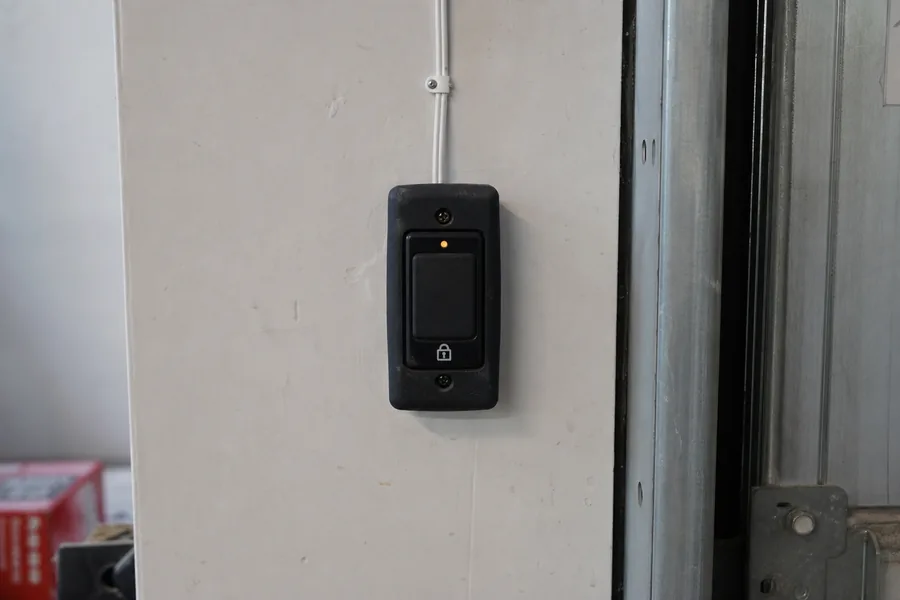
From the most frequent find to the least:
An open garage at night is an open side door to the house, especially in a two-story where the bedrooms are upstairs and nobody hears a thing. Tell us it won't shut and it goes ahead of routine work; the technician leaves with a matched pair aboard, and the arrival window allows for the connector and the perimeter.
It's tempting to unscrew the sensors and aim them at each other on a shelf so the door will finally close. Please don't. The door then closes with nothing guarding the opening, which is how pets and kids get hurt.
Steady lamps, nothing in the way, and the door still turns around? Then the opener is reacting to something other than the beam. If it reverses the moment it touches the slab, the close limit is set too deep. If it reverses halfway and the door feels heavy by hand, the springs have weakened and the opener is hitting its force limit.
Georgia humidity adds to that. Wood jambs swell, rollers rust, and after a wet week the rubber seal can cling to the concrete, so the door takes more effort to move than the force setting allows. That's why the door gets checked alongside the sensors.
Moisture, surges and the occasional bumper eventually finish a sensor. We carry matched pairs for LiftMaster, Chamberlain, Genie and the other common brands, and because the two halves are made to work together, both are replaced at once.
Damaged wire comes out and a fresh run goes up in insulated clips, clear of the tracks and anywhere bikes or tools get leaned.
Both sensors are set at the same low height, square to each other across the opening. A bracket that has been straightened before gets replaced, since it will wander again.
Tandem bays and extra-deep garages mean longer wire runs, so the technician checks the whole length rather than just the ends.
The technician works from the simple to the less simple: clutter in the line, the lens faces, the aim, then the wiring to the opener. A sensor that has failed is replaced together with its partner. Before wrapping up, the opener is disengaged and the door raised by hand, because a reversing door often has a spring or roller issue hiding underneath.
Most visits are brief. If the door needs more than sensors, you hear exactly what and why first.
"The motor must be going." Rarely. A door that reverses for an obstruction is behaving exactly as designed.
"Just take the sensors off." They're the reason closing doors don't injure people. We repair them and leave them working.
"New eyes mean a new opener." A replacement pair connects to the unit already hanging from your ceiling.
Yes. A heavy coat on a lens dims the infrared line, and the receiver treats a weak line the same as a blocked one. It's one of the most common spring calls we get, and the lenses are cleaned and the pair lined up again on the visit.
Surges can damage a sensor, the wire, or the opener's sensor circuit. The technician tests each in turn with a meter, and a surge protector at the opener's outlet is worth adding afterward.
Probably neither. The receiver's lamp goes out whenever the line isn't reaching it, so aim, lenses and clutter are ruled out before any part is replaced.
The setting sun is reaching the receiving eye. Moving the receiver to the shaded side or adding a shade ends it.
Yes, everywhere we work in the metro, and you hear whether new sensors are needed before anything is done.
Often the same day. A garage that won't shut outranks routine work on the schedule.
Whether you're in Decatur, Dunwoody, Marietta or Snellville, a single call sets up an arrival window that already allows for traffic, and the technician phones while heading over. Nobody guesses at a door they haven't seen.
Free estimate across the metro, including Decatur, Sandy Springs, Dunwoody, Roswell, Marietta, Kennesaw, Johns Creek, Douglasville and Gwinnett.
Describe the lamps and the door, and we'll tell you straight whether it needs a visit today. Estimates are free anywhere in the metro.
Rather say it out loud? Call (770) 629-9647.
Which lamps glow and what the door does. We don't bill for estimates.