
Day to day it's the insulation you notice. Bare R-0 to R-2, polystyrene R-6 to R-9, polyurethane R-12 to R-18. Stiffer and much quieter.
Tell us what the door does. Free estimate, nothing attached.
Most new garage door installation calls we take start the same way. The door moved fine yesterday. That is normal. The parts that fail carry the door's weight, and parts under that kind of load go suddenly, not gradually. Humidity rusts cables and bottom brackets, and summer storms drop limbs and debris into tracks. Which is how we carry the parts for it on the van rather than ordering them in.
Installing a door is four jobs. Four measurements: width, height, headroom, backroom. The old door, track and springs come out. New track is set plumb and square to the opening. Not reused, not bent to fit what was there. The door goes up a panel at a time, hinged and strutted, and the spring is sized once the finished weight is known. Skip that last calculation and the new door punishes its opener from the first week.
Free estimate wherever you are or Dunwoody, Sandy Springs, Marietta, Kennesaw, Johns Creek, Douglasville. Decide against it after the look and that is where it stops.
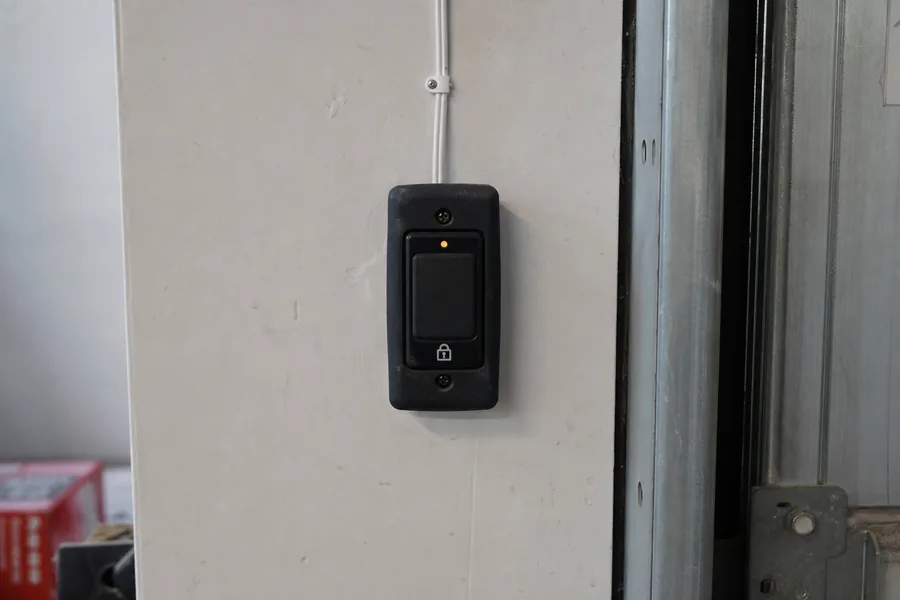
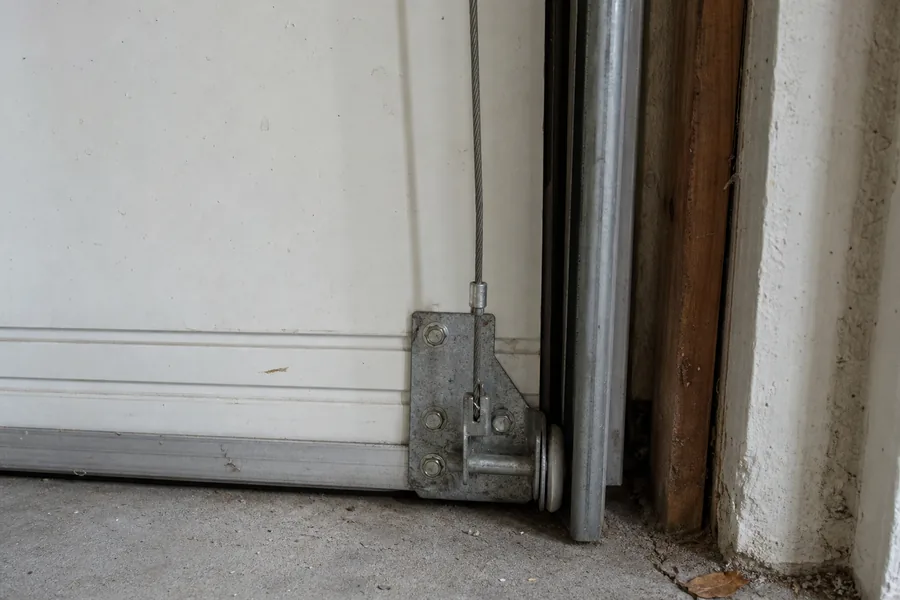
Replace when the panels are gone: rot, rust through the skin, or impact damage across more than one section. If you use the garage as a room and the door is single-skin, replace it. Once repairs come more than once a year, replace: you're buying a door in pieces and never getting the door.
If you're nodding, a technician needs about ten minutes with the door. Not on a call. Free.
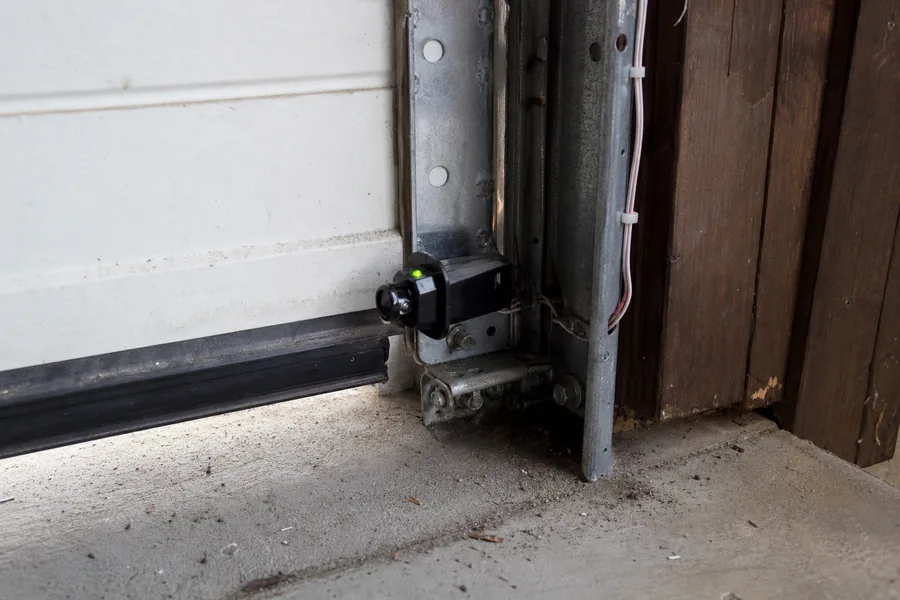
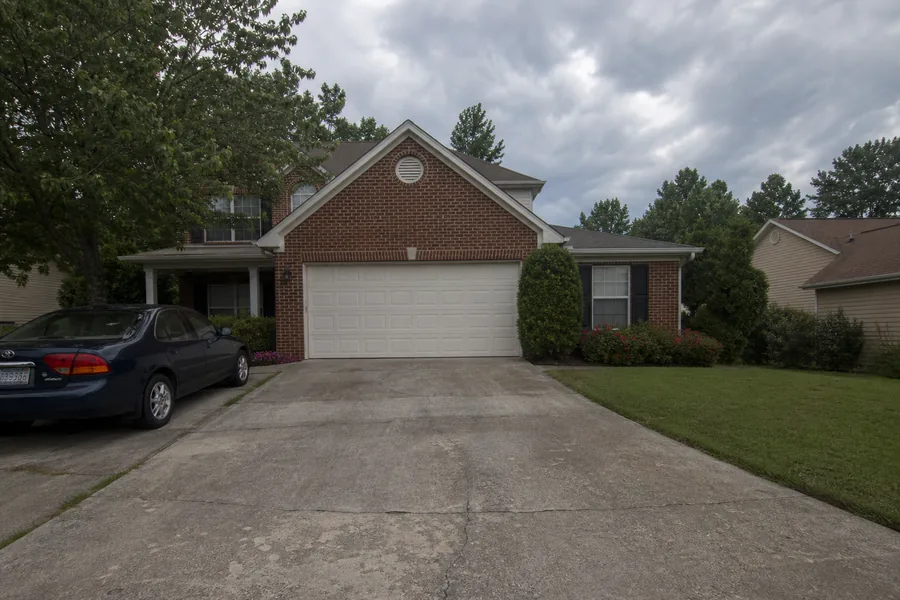
Even when it can be done, it shouldn't be. New door, new track, set plumb and square. Most complaints about noisy new doors trace back to old track that was kept.
Insulation is where the difference shows in daily use. R-values run from about R-0 to R-2 for a plain door, R-6 to R-9 with polystyrene, and R-12 to R-18 with polyurethane. Stiffer and markedly quieter is the other thing polyurethane gives you.
Only when it is old or already misbehaving. If it has years left, it stays. Changing it while the door is off is almost no extra work, which is worth knowing before you choose.
None of that is unusual. A verdict without a visit gets you that; ours waits until the door has been looked at in person.
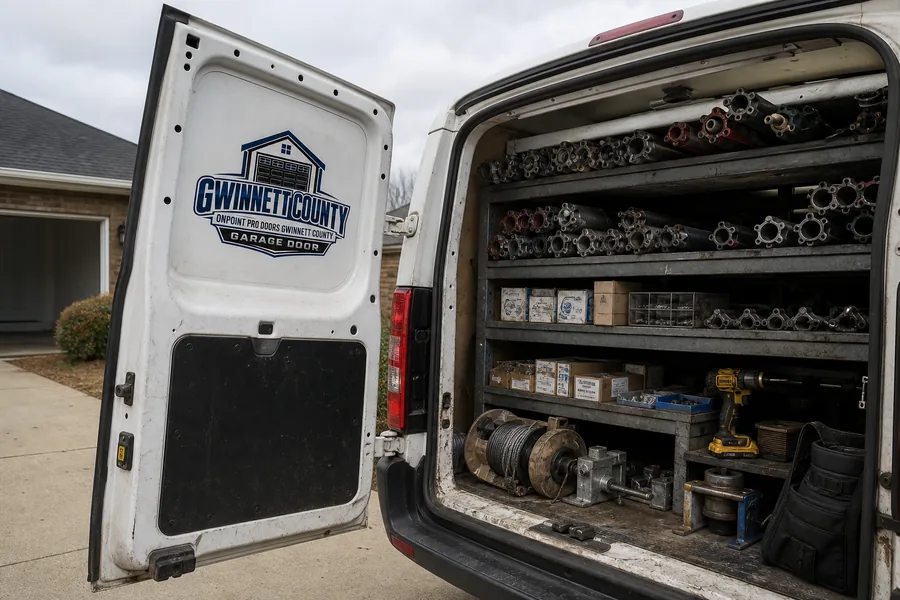
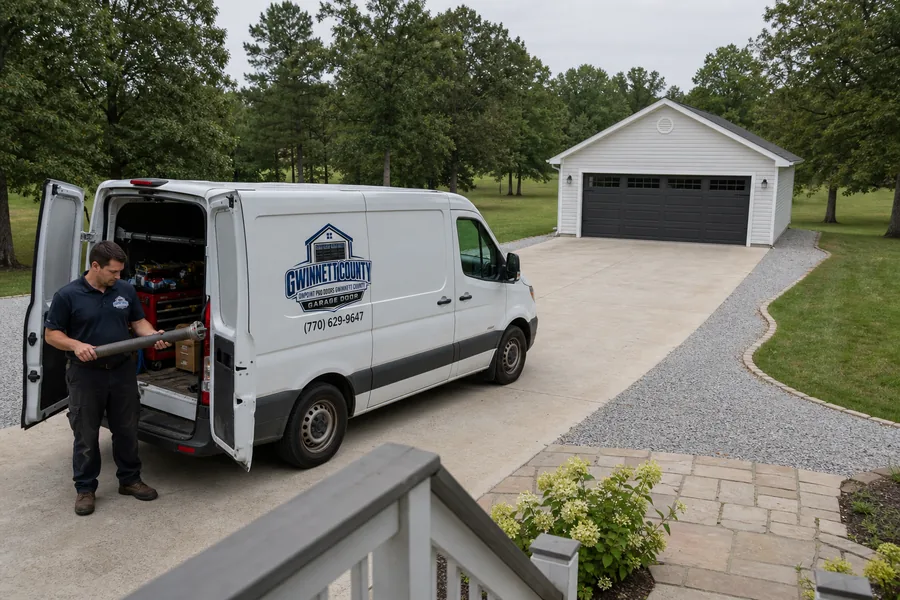
Most people postpone it; here is what the postponement tends to bring. None of the following is unusual. That's the usual order of events; we see it most weeks.
Finding out where you stand is free, because the estimate is. That's why calling early beats calling late.
The door outlasts its parts by a wide margin: twenty to thirty years versus a fraction of that. The door lasts decades; springs, rollers and cables don't. A good door needing work three or four times over its life is normal.
The R-value is the insulation rating, and of all the numbers it's the one you'll feel. As a guide, plain doors are R-0 to R-2, polystyrene R-6 to R-9, polyurethane R-12 to R-18. Stiffer and quieter as well, which you'll notice from the room over the garage.
A new door is the moment to replace an aging opener, because the labor overlaps almost completely. It's also the moment to switch to nylon rollers, since the door is being assembled from parts anyway.
Of all the measurements, headroom is the one that surprises people. Measured from the top of the opening to the ceiling. Standard torsion needs about twelve inches. There's low-headroom track for less space, but it must be ordered up front, not discovered at the door.
Keeping it in use is not safe, and nobody wins by pushing it. The counterbalance's share of the weight gets dumped onto other parts. Hinges, brackets, the opener's gear. Every one of them is a larger job than the part that actually broke.
Need the car? Door all the way down, opener released, then lift. Without a spring, a partly raised door finishes the trip down by itself.
Not if a spring or cable has gone. Leave it down and don't force it. The counterbalance stores a lot of energy, and it can release without any warning.
Yes when the opener is near the ten-year mark. The door is off anyway, so swapping the head adds little time, and the new one is quieter and warrantied.
Yes. We look at the door on site wherever you are and tell you straight. The estimate is free.
When repairs are becoming a habit, when rust or rot has spread past one panel, or when a single-skin door is the only thing between a workshop and the weather, it's time.
Yes. Brands differ on the sticker more than in the hardware, and springs, cables, rollers and gears are carried for all the common ones.
Yes, and not through a message service that calls you back in the morning. A night call gets dispatched the same as a day call.
Describe the behavior, the sound, and the door's rough age. That much usually identifies the failure and the parts to bring.
A free estimate with nothing owed if you'd rather not go ahead. Atlanta, Dunwoody, Sandy Springs, Marietta, Kennesaw, Johns Creek, Douglasville and the rest of Atlanta.
A photo of the door from inside the garage, with the door closed, tells us most of what we need. Send it after the call if that's easier than describing it. It lets the tech load the right parts before leaving.
We give a two-hour window rather than a day, and we call before setting off. Free. The estimate is free either way.
Rather say it out loud? Call (770) 629-9647.
Tell us what the door does. Free estimate, nothing attached.