
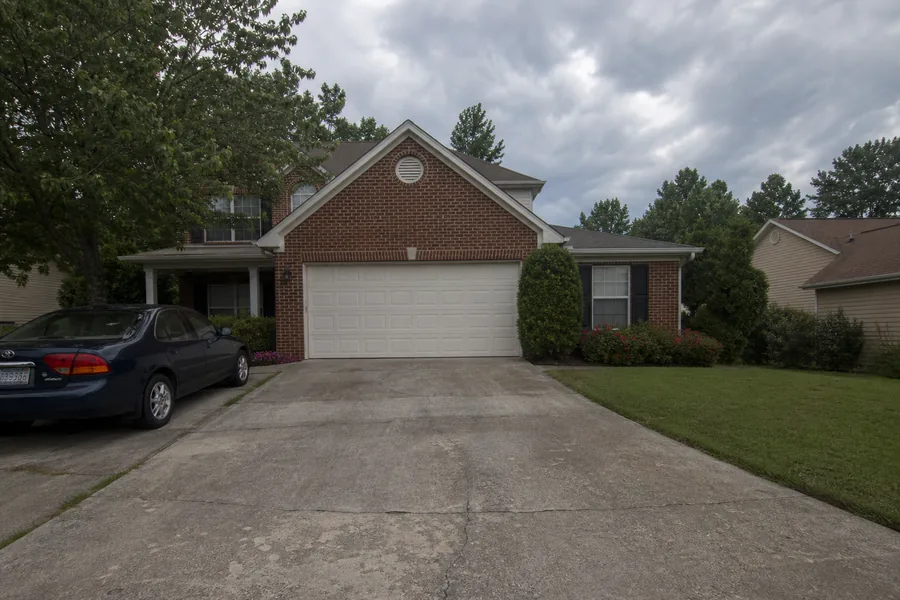
Snellville is the southeast-Gwinnett city along Highway 78, mostly 1980s-to-2000s subdivisions with attached two-car garages and steel double doors, many of them original to the house and now on their second opener..
Tell us what's happening. Free estimate, nothing owed.
Snellville is the southeast-Gwinnett city along Highway 78, mostly 1980s-to-2000s subdivisions with attached two-car garages and steel double doors, many of them original to the house and now on their second opener.
The pattern is age: springs at the end of their first life, steel rollers grinding, cables fraying at the drum. Rollers swapped for sealed nylon quiet the door and take strain off the opener; springs are replaced in pairs and the door rebalanced.
Storm season brings the opener calls. Boards taken out by a surge are replaced without replacing the opener, and remotes are re-paired before the technician leaves.
Along Highway 78 and Scenic Highway the strip centers and service businesses run roll-up and sectional doors that open all day, and those cycle their springs out far faster than a house door; commercial springs and hardware are on the truck for them.
Snellville's subdivisions were largely built in two waves, the late 1980s and the early 2000s, so whole streets reach the end of their first springs and their first opener boards in the same few years. When a neighbor's door goes, yours is usually on the same clock, and a balance check takes an hour rather than a weekend without the car.
Snellville also has a large share of homes where the garage has been finished into a room or a workshop, with the door insulated after the fact or blocked from inside. A door that is rarely opened hides a failing spring, and an insulated door on original springs is heavier than they were sized for; both are worth a yearly balance check.
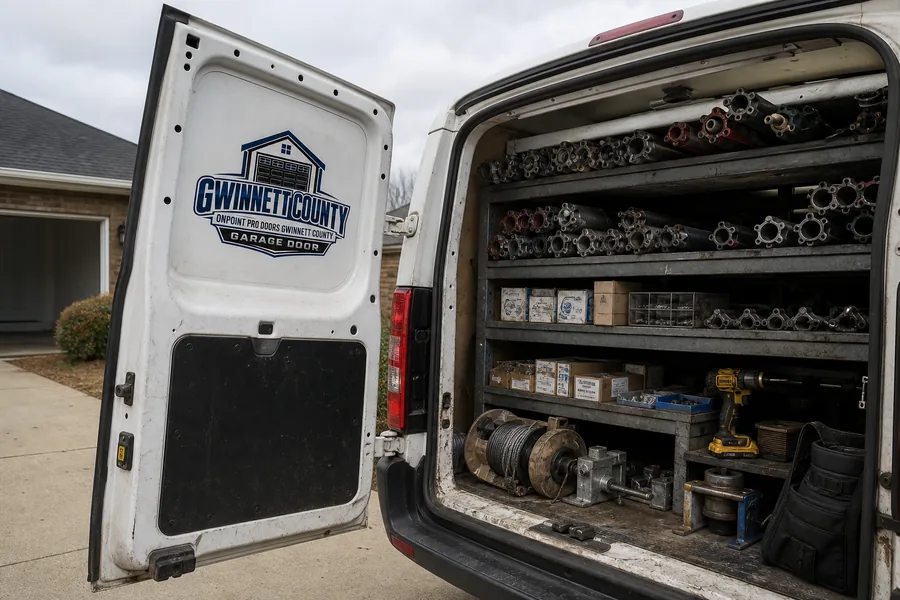
The same six jobs as everywhere else we work, with the parts for the doors common here already on board.
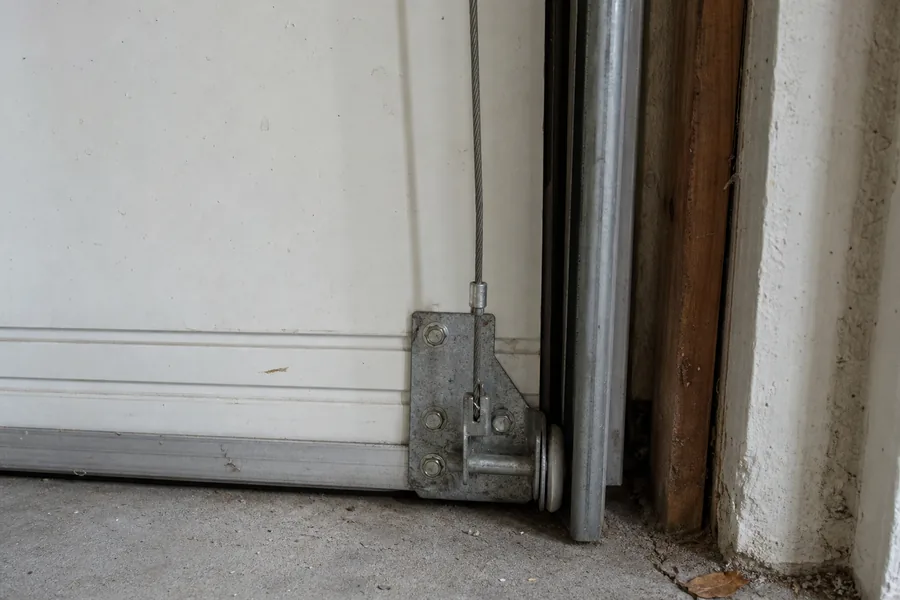
Both springs on a double door have cycled together; when one breaks the other is close behind. Both go on together, sized to the door's weight.
Wood and wood-look doors swell in humid months and rub the jambs, and their hardware runs heavier. Adjusting the tracks and re-tensioning for the true weight fixes the binding.
A door hidden from the street fails unnoticed. A yearly balance check is the answer for side-entry garages.
A dead opener after a storm is the logic board nine times in ten. Replaced on the spot; remotes re-paired before the technician leaves.
Gwinnett's housing boom means whole neighborhoods hit the same failures in the same years: first springs, first opener boards, first rusted brackets. A door that hesitates on the way up is the warning.
Storm season sets the rhythm of the opener calls; humidity sets the rhythm of the hardware calls.
The technician calls before setting off and again when close. The hand-lift balance test comes first; it decides whether the springs or the opener are the problem.
Wood and carriage doors get their track spacing and tension checked before anything is replaced, because most binding is adjustment, not damage.
Steel doubles on the 1990s-to-2010s subdivisions, heavier carriage and wood doors on the large-lot neighborhoods, and Chamberlain, LiftMaster and Genie openers of every generation.
Every one of those is routine. The wood and carriage doors want a technician who has handled their weight before, and the openers want the right board on the truck, which is why the make and model are asked for on the call.
Gwinnett's year: pollen in spring, lightning in summer, and a handful of freezes in winter that break the tired springs. Underneath it all, humidity that rusts the bottom of every steel door.
A fall tune-up and clean sensors in spring cover most of it.
Fixing the existing door is the default. Springs in pairs, sealed rollers, new cables and brackets, a board in the opener: all one visit. Replacement is proposed only for doors rusted or rotted through in more than one section, and you hear it plainly.
Clear the floor in front of the door and anything leaning on the tracks. If the door has come off its track, leave it rather than forcing it back. A photo of the opener's label, and of a wood or carriage door as a whole, lets the technician bring the right hardware on the first trip.
Nothing else needs preparing. Side-entry garages: leave the gate or side path open so the technician can reach the door.
Snellville is on the route most weeks, with Grayson, Loganville, Lilburn, Lawrenceville, Stone Mountain. Not listed? Call; the map is drive time, not lines.
Calls from Snellville are booked into two-hour windows, and the technician calls before setting off and again ten minutes out, so nobody waits at home for a truck that is still an hour away.
Usually the same day. Springs, cables, rollers and common opener parts are on the truck.
Pollen on the safety eyes. Wipe the lenses; if it still reverses it is a short visit to realign them.
Yes, on a two-spring door. They have worn together and the second is close behind.
Yes. Their hardware is heavier and their springs run heavier; both are standard stock.
Almost always the board. Replaced on the spot; the opener stays.
Yes. You hear what has failed and what it takes before any work starts.
Then a yearly balance check matters more for you than for most. A failing spring on a hidden door goes unnoticed until it breaks.
Around Atlanta, one call gets you a two-hour slot and a heads-up call before the technician sets off. We don't buy leads and nobody on a phone judges a door they can't see.
Free estimate across the Atlanta metro, GA and the towns around it.
Explain what the door is doing and we'll say, honestly, whether today is necessary. Free estimate wherever you are.
Rather say it out loud? Call (770) 629-9647.
Tell us what's happening. Free estimate, nothing owed.